Should I Stay or Should I Go? Making Contractual Decisions

It is that time of year again – people are starting to make decisions about whether they are staying or leaving their international school contracts. It can be really tough to make a decision, especially when you don’t have a job already lined up. So, if you are in the cycle this year, here are some things you may want to consider:

Your Current Job:

  • On a scale of 1 to 10 – how much do you enjoy work when you are there?
  • How well do you get along with your collegues and direct line management?
  • How much autonomy and control do you have?
  • Is your workload manageable?
  • Do you like your students overall?
  • Do you feel like you are being challenged enough?
  • Do you feel valued at work?
  • Do you like going into work most days?
  • Are the pay and conditions good?
  • Do you have enough resources to do your job effectively?
  • How is your working environment?

Your Career (If this is important to you)

  • Are there opportunities to progress in your current school?
  • Are there opportunities for you to have more control over your work in your current role?
  • Are there opportunities for a pay rise in your current position?
  • Would you like to work for a higher tier, or a better known school?

Your Family

  • If you are currently with a partner and/or children – are they happy where you are?
  • If applicable, is there better opportunities for work for your partner elsewhere?
  • If applicable, where are your children in their education? Will you get stuck if you stay?
  • If you don’t currently have a partner and/or children, do you see a future for this where you are?
  • Are there issues with family members back home that mean you would like to be closer?
  • Are there any physical or mental health needs that would be better treated elsewhere?

Your Work/Life Balance

  • Do you feel you have a life outside of your work?
  • Are there opportunities for fun or hobbies where you live?
  • Do you “gel” with your current country, or would you be more suited elsewhere?
  • What do you like and dislike about your current country?
  • Do you have the energy to have a life outside of work, or is this job burning you out?
  • Do you only stay because of the money?

Making a decision this early in the school year can be really hard, and if you would like some impartial support to make your decision, I am offering a limited number of 3 solution-focused coaching sessions for the reduced price of ฿‎7000. Book yours below:

Go back

Your message has been sent

Warning
Warning
Warning
Warning!

Staff Wellbeing in Schools: Burning Out

I will always remember my first term working in a school. I couldn’t believe how absolutely knackered I was – I don’t think I had ever been so tired in my life. The job itself – school counsellor -didn’t hold as much responsibility as I had assumed in my previous roles managing charities. I wasn’t responsible for staff, or finding funding, or for keeping the organisations afloat. The problems I helped with, for the main, weren’t ‘heavier’ than in previous roles where I had worked with young people in crisis. It was something else. Something else that I had never felt before – the feeling of being part of a huge machine that just doesn’t stop for breath. I laugh about it now – my caseload at the time was tiny in comparision to how many students I saw the year I left, but it wasn’t the amount of work as such, it was feeling like you could never stop – there was always something or someone that needed your attention. If you got distracted for even a second you would miss something important. And the emails – my goodness the sheer volume of emails!

I don’t find it surprising therefore that a 2019 study found that 40% of British teachers were considering leaving the profession – and this was pre-Covid. My guess is that it is much higher now. When I left my international school in 2022, a third of the teaching staff went at the same time. After 18 months of being locked into the country, many wanted to be closer to their families in Europe. Many left the profession altogether.

I have facilitated a number of staff wellbeing groups for both teaching and non-teaching staff recently, and the struggle is the same for both. The long first term has all school staff clinging on for dear life, struggling to get to the end. 14, 15 even 16 week terms are normal, and exhaustion is normalised. “What do you like best about your job” I ask people – “the holidays” are usually the reply. Term time is full of demands. Parents demanding that their children get the right extra-curriculas or that the buses run on time. Students demanding that their teachers give them advice about essays and homework over the weekends. Senior Leadership ‘dropping’ a last minute activity or task upon already overloaded staff. A never ending stream of emails demanding to be read.

Unsurprisingly then, burnout is all too common amongst people who work in schools. I have seen it firsthand with a colleague I valued greatly. Sadly, by the time we realised what was happening for her, it was already too late and she ended up leaving. It starts with an expectation on yourself that you must prove yourself and you must do more. It ends with you physically unable to go to work. In between you feel guilt that you are letting people down, anger and irritability with colleagues and students, and, feeling unable to face colleagues you isolate yourself. It is possible to bounce back from burnout, but for many this means a change of school, or leaving the profession altogether.

There are a number of factors which affect the likelihood of burning out which are not just about the workload someone is faced with. These include staff members feeling unappreciated by their management, not feeling they have autonomy or control over their work and a lack of community and support.

So what helps? When asked that question, school staff routinely say ensuring they do things outside of work, like hobbies or exercise. But they also acknowledge that these can be the first things to go when they start feeling tired. Asking for help from colleagues, and taking the time to check in with each other during the day can be a lifeline. Seperating home from school by deleting your school email account from your phone is a controversial one, with some staff too scared to do so despite their being no requirement to have it on there. If you can’t delete it, don’t answer emails after 5pm. Or if you have to, schedule send them for 7am the following day – this will reduce the expectation on you that you are available 24/7. And, finally, if you start to realise you are struggling, seek professional help from a counsellor or other mental health professional. Burnout is tough – understand the signs to get the help you need early.

If you would like to find out more about burnout in education you can download our free Anti-Burnout Book for Teachers here.

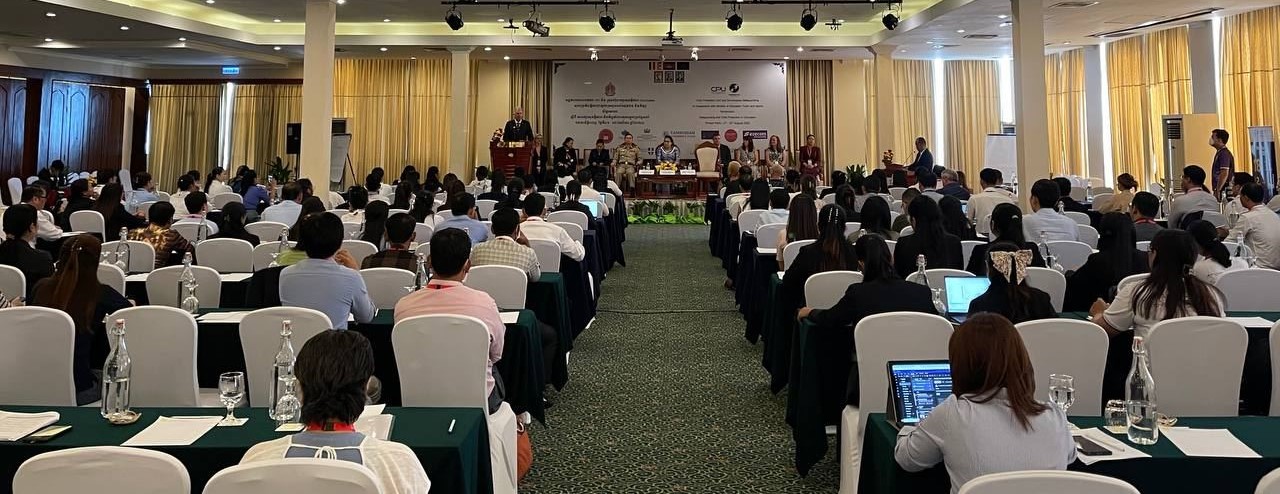
The First Symposium on Safeguarding & Child Protection, Cambodia, August 2023

This week I was honoured to be a part of the first Symposium on Safeguarding and Child Protection in Education, held in Phnom Pehn in Cambodia, alongside Sian Jorgensen from Encompass Safeguarding and the Child Protection Unit a non-governmental organisation dedicated to helping the local police solve serious crimes against children.

On day one I trained 16 people from the Anti-Human Trafficking and Child Protection Unit of the National Cambodian Police, teachers, charity workers and representatives from the Ministry of Education and the Ministry of Womens Affairs, in Basic Psychological First Aid for Young People. This was a Training the Trainers course, meaning they will then be able to train their colleagues and other staff who may find it helpful. Psychological First Aid is a relatively new concept in Cambodia and I hope the training is cascaded to those who need it.

The conference started in earnest the following day with Sian training 130 teachers from 40 schools across the region, in Level 1 Safeguarding. teaching them how to spot if a child or young person is being abused and what they need to report to their designated safeguarding leads. She also had trained about 16 people the day before to be safeguarding trainers themselves.

On day two participants heard talks on the laws in Cambodia with regards to sexual consent and sexting, safer recruitment of staff, how to talk to children who are disclosing abuse, and from me, a presention on Peer on Peer Abuse with a focus on sexually harmful behaviors, and a talk on the importance of believing children when they disclose, and being mindful of our body language and tone of voice as to not victim blame or further shame children. The main points of my presentations are below:

Peer on Peer Abuse: Main Points

  1. Young men under 18 are the age group most likely to be victims of, and perpetrators of serious physical violence.
  2. The place young women are most likely to be sexually harassed or assaulted worldwide is school
  3. The strongest indicator of adult interpersonal violence is early exposure to it and peer approval of it. Young people because of their age and experience may not know what a healthy relationship looks like and will rely on scripts from their friends.
  4. Where peer on peer abuse is normalised by friends and family, there is less safety seeking.
  5. School has the opportunity to disrupt the normalisation of peer on peer abuse by teaching about consent and healthy relationships.
  6. It is important to by tackle the “lower levels” of sexual violence such as sexualised name calling, rape “jokes” and cat-calling, because these normalise more serious sexual violence.
  7. Do an audit of your school with your students – where do they feel unsafe? Where is bullying and sexual or physical violence most likely to happen? What suggestions do they have to disrupt this?

Responding to Children Who Have Been Harmed: Main Points

  1. Hearing stories of abuse can be heart-breaking and it can be tempting to ignore the signs that something is wrong, but we mustn’t do that.
  2. Shame, fear of, or attachment to their abusers can hinder a child disclosing what is happening to them.When we are talking to them, we must ensure we don’t blame them or shame them as this will stop them from talking to us, or perhaps even seeking help in the future.
  3. What children and young people can’t tell you with their words they will show you with their behaviour. As educators we must look out for changes to their ABCs – appearance, behaviour or communication (this can include social media posts, drawings and creative writing).
  4. Tone of voice and body language is incredibly important. We must pay attention to the messages we give off when talking to children and young people. A sharp or angry sounding tone of voice will make them feel shamed or a nuisance and will shut down conversation. Looking distracted or like you need to be somewhere else will make them feel like you don’t care, and shut down conversation.
  5. It is not your job as educators to determine guilt or innocence. You don’t need to interrogate them, you just need the basic facts to handover to your DSL or the Child Protection Unit.
  6. There have been too many cases where children have died at the hands of parents because, despite lots of people knowing that something was happening, no-one did anything, because they questioned themselves “what if I am wrong?”. As a former DSL in a school I would much rather get a report that turned out to be nothing, than something not being reported that was something. Don’t ask yourself “what happens if I am wrong” ask “what if I am right”
  7. Sexual predators don’t only groom young people – they also groom the adults around them. In schools, it is important to be clear on what is and isn’t appropriate behaviour in terms of teacher-pupil. And let the students know who to report to if it happens to them. Students are rarely surprised when a teacher is arrested – they know who the creepy teachers are, the problem is they assume you do too.

I had a great time in Cambodia and I hope that I am able to go back to build upon the work we started there. Many thanks to Sian for inviting me along, and to everyone at the Child Protection Unit for their amazing hospitality and for pulling together a packed conference in a few short months.

You can donate to the Child Protection Unit, through their parent NGO the Cambodian Childrens Fund here. They are a small team who help the Cambodian National Police to solve serious crimes against children. They also support child victims and their families by supplying basic foods, and help train the Cambodian Police Force in interviewing and forensic skills. They do amazing work for victims.

What is needed to live a good life?

Daily writing prompt
What are the most important things needed to live a good life?

The one thing that connects all humans in their need for a “good life” is connection. Each of us, no matter who we are need to believe that at least one person, somewhere, cares about us.

Ever wondered why some people who seem to have it all, are miserable? It’s lack of true connection, once they are rich / famous, they may start to doubt that they have true friends. A similar thing happens with “affluent neglect” – those kids that have everything that money can buy but their parents are absent or emotionally unavailable as they spend all of their time working.

Connection and friendship/love are protective factors against a whole host of mental health issues. When people feel disconnected and lonely they are more at risk of serious mental health problems. This is why one of the highest suicide rates are amongst the elderly – everyone they’ve loved has already gone. When people feel connected to someone, they are more likely to overcome lifes challenges. Every time I hear a story of someone managing to live a great life after a childhood full of abuse, there is always someone that they connected with, that showed them compassion and care – often a teacher, but it could be anyone within the community.

So find your person, or your tribe. Phone a friend you haven’t spoken to in a while. Join a sports club or do something that gets you out and about to meet people. Hold close the people you care about. Smile at random strangers, talk to people on public transport, laugh with your co-workers – you will never truly know the positive impact you have on them and they may need it more than you do.

Three Great Self-Help Books for Mental Health (that you’ve probably never heard of)

Rock Steady by Ellen Forney

Whats it about?
Ellen Forney is a graphic artist with Bipolar Disorder. Her graphic memoir “Marbles” charts her unravelling into mania then her journey towards diagnosis and treatment, while this one is all about how to cope when your mental health isn’t great.

Why do I love it?
Firstly it is a graphic novel aka comic so it is super easy to read and follow. It is also packed with great advice and explanations of the different kinds of therapies, how to pick the best therapy for you and how to cope in a mental health crisis. Although it is aimed at people with bipolar disorder, the advice within it is helpful to most people, and as a counsellor I teach many of the coping strategies outlined in this book.

F*ck Feelings by Michael I. Bennett MD & Sarah Bennett

What’s it about?
The subtitle of the book is “One shrink’s practical advice to managing all life’s impossible problems” and that’s exactly what it is – covering everything from annoying family members, to wanting to make everyone feel better, to heartbreak and everything inbetween. And despite the title, they actually care about feelings a lot but recognise you can’t always get what you want – so will give you realistic alternatives to stop you being miserable.

Why do I love it?
I adore the structure of this book which is basically –
1. Here’s what you wish for but can’t have
2. Here’s what you can aim for and actually achieve
3. Here’s how you do it.
It is super practical, realistic and actually quite funny.

I also find that people can be miserable because they want people to change or for things to be different in ways that they can’t, and this book aims straight for that.
Caution though – as the title would suggest – it is full of swears.


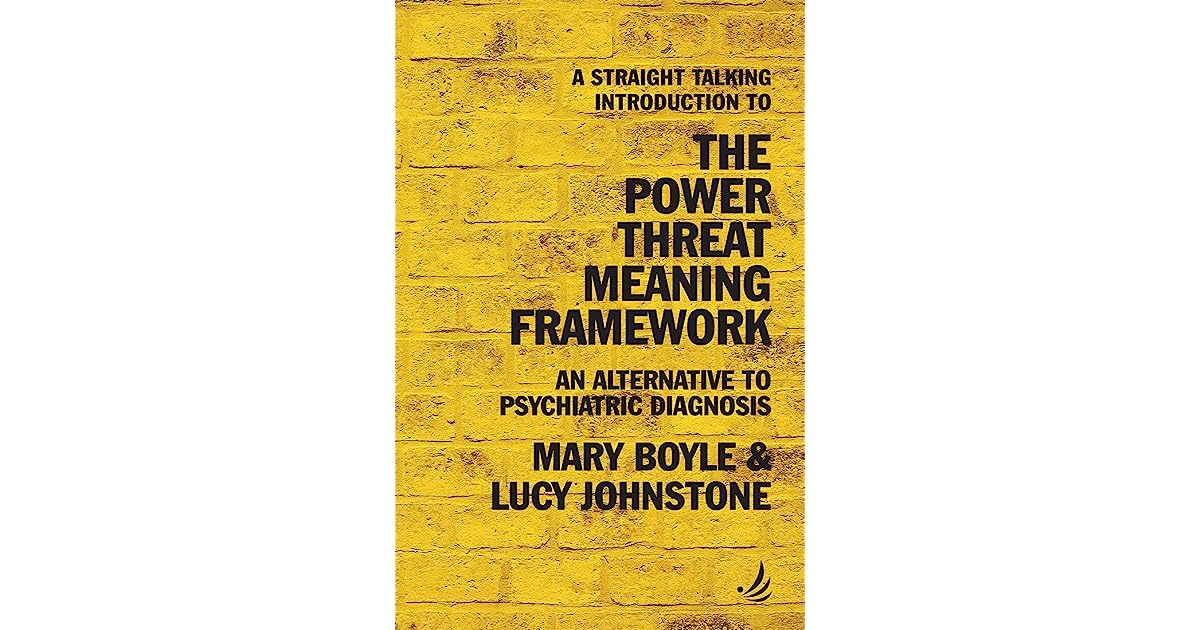
“A Straight Talking Introduction to the Power Threat Meaning Framework – An Alternative to Psychiatric Diagnosis” by Mary Boyle & Lucy Johnson

What’s it about?
While not a self-help book in the traditional sense, I think this could be very helpful to a lot of people who are struggling to understand why they feel the way that they do. As it states on the title, this is the alternative to the medical model of mental illness – so instead of seeing mental ill health as a series of diagnostic symptoms (what is wrong with you?) it instead sees the way you feel/behave as a series of coping strategies because of something that happened or is happening to you. The idea is that the general patterns of ‘mental illness’ represent is what people do in the face of threat and talks about surviving or coping with certain life dilemmas, not about having certain conditions.

Why do I love it?
Although the title is an absolute gobfull and hardly the most appealing – the book is actually really easy to read and understand and has questions at the end of each chapter for the reader to reflect upon their life experiences and how they coped. This is not only about trauma in the traditional sense but also about our lives generally, taking into account our experiences of discrimination, poverty and other aspects of power that we may or may not have. As a counsellor who reads a lot of mental health content, it is also my most bookmarked and underlined book.

Have you read any of these – what did you think? What other books would you add to the list?

Revision Audit

I recently posted a reel on Instagram explaining how to do a revision audit if you (or your child) were feeling overwhelmed with how much stuff you have to revise for your upcoming exams. Doing an audit of what you already know helps you to prioritise what to concentrate on and gives you a little boost and reminder of what you already know. An example audit is below; I recommend you do it for every subject you have

The Cycle of Self Esteem

Many years ago I worked as a Sex & Relationships Outreach worker for a small team based within the NHS called Teenage Kicks. We did 3 sessions as a staple offer. One on self esteem and rights, one on relationships and one on contraception. I’m unsure where this exercise came from (my guess is probably something from Jo Adams) but it has been one that has created so many AHA! moments for both young people and adults, not only in terms of self esteem but also in recognising that we are not mind readers and cannot always tell why someone is behaving the way they are.

This is how I use the Cycle of Self Esteem (though sometimes I don’t call it anything):

Getting young people to understand not everything is about them:
One day I was talking with 2 young people at war. Previously the best of friends, each swore blind that the other had stopped speaking to them first. Turns out, Person A had went to talk to Person B between classes, and Person B had walked off and ignored them. Person A then believing Person B had stopped speaking to them avoided them and effectively stopped talking to them. Person B had no idea what happened. They were so caught up in worrying about a test they had the next period that they hadn’t noticed Person A trying to talk to them, all they knew is that their best friend stopped talking to them seemingly without reason. So they didn’t talk to them either. What they both thought “they’re not talking to me, what did I do wrong?” caused them both to avoid the other person. They laughed when they realised what had happened. I use this example often when people get stuck in the “its their fault”

Changing our thoughts & behaviour to support peers
Along the same lines, within Psychological First Aid Training for Students I ask young people to write down all of the things that someone might be thinking or feeling when they are having a bad day, We often get ideas such as feeling upset, or angry, thinking no-one likes them, or that the world is unfair. Then I ask them to consider how this may impact their behaviour – examples are usually things like withdrawing, not talking to people, acting moody or snapping at people. How might others think/feel about them? And how will that impact their behaviour? The reflection here for young people, especially those who are being trained to provide peer support, is to understand that how people behave is rarely about those around them, it’s about them. So if our first reaction is to believe it’s about us, we will often withdraw as well which may further impact how bad the person is feeling. If our thoughts are “they’re clearly having a bad day” we are more likely to ask if they are okay and what they need (which may be to be left alone which is fine). It also seperates us from feeling automatically responsible for someone elses behaviour and helps them to take responsibility for feeling better.

Helps young people to think about coping strategies & ways to change mood
We all have bad days, heck sometimes even bad years, and sometimes our behaviour can be less than pleasant. It is important to stress that no matter how we feel we are always responsible for our own behaviour. Understanding what we need when we are feeling down to help us feel better or to recharge, and verbalising that to friends and family is really important. If you know that you get really angry and want to argue and fight with people when you’re stressed out, perhaps trying a different strategy like taking a really cold shower or venting it all out on paper is better. And be upfront about it – tell people that this is how you feel and what you need to do to feel better. Have those conversations, otherwise people may think your mood and behaviour is all about them.

Humans are social creatures and we often make assumptions about people based upon how they behave. As a side note I’ve found that explaining that a child has, for example, ASD or ADHD, can dramatically alter other people’s perceptions of them in a positive way, as they no longer think of their behaviour as defiant or trouble-making. The belief that a child is doing a certain thing just to annoy you, as opposed to they can’t help their behaviour is a seisemic shift when it comes to how we behave towards them, and how they in turn feel about themselves.

Is this something you think could be useful in your work with young people? Or is this something you already use? Let me know in the comments

Change & Loss in International Schools

Living abroad can be both exhilarating and exhausting, and those who work or study in international schools often find themselves facing a continuous cycle of change and loss. In August there is a flurry of new faces, some incredibly excitable, some massively overwhelmed and others whose sadness from their loss of home drips from them like water, pooling around their feet. Students and staff wonder who are their people – who amongst these newbies will be their friends this year? Maybe they even signed up to be buddies keen to replace the friends they lost last year and are striving for connection.

Then just as the term starts to settle talk begins of contract renewals – who is up for renewal this year? Whispers about who is leaving and about who should probably leave as they clearly hate it but yet are still there year after year, hanging on for the cash while making themselves and all around them miserable…

By early term two, bang in the midst of newbie homesickness, the rumours start flying about who is going and where. We learn that that one family who has kept us sane for the past few years is moving to Europe to be closer to family or the colleague that keeps the department together is heading ‘off to new adventures and we wonder how we will cope without them.

The constant pinging of Whatsapp group expat sales groups between April and June provide the soundtrack to remind you that people are moving on. As the leavers panic about selling everything, the sadness sets in for those left behind.

The stayers start to try and make new friends with other stayers while their houses get fuller with reminders that the only constant in this life is change. The blender from the science teacher, a random assortment of cups to give to your new buddy, some awful picture that your friend clearly bought while drunk in Bali; houses haunted by the appliances of expats past.

And after the goodbye parties and half-hearted promises to always keep in touch you move onto the summer holidays before the rollercoaster starts again.

It may get to the point where you give up trying to make friends. That the loss of losing so many people you care about makes you reluctant to try again. It’s understandable, yet we all need connection – old hands and newbies alike. Unresolved loss can lead to us feeling depressed and thinking it is better if we just don’t even try anymore.

If this is you, please reach out for some support.

Join my Bookclub!

Would you like to know more about mental health? Love reading?

This year I have decided that I would like to read one mental health / self-help book per month. It started with looking at my bookshelf and realising I could do with some much-needed external pressure to make it through my TBR pile! Will you help me? You don’t need to read everything – just read along with the ones you are interested in. No stress, no pressure! We certainly don’t want you feeling more overwhelmed trying to ensure you read and finish everything. I should also admit I am a massive DNFer (did not finish); this is probably to do with the fact I have ADHD and if something isn’t interesting me enough it is almost painful to keep going! So rest assured I will try my best to ensure there isn’t any “dry” books this year.

This is where we start: “It didn’t start with you: How inherited family trauma shapes who we are and how to end the cycle” by Mark Wolynn. This has been on my TBR pile for a long time. Have you read it? If not will you read along?

You can join the Facebook Group here