On 23rd September 2025 I delivered a webinar to 126 people from 14 different countries about what I had learnt so far on my doctoral journey. You can watch at the link below.
Let me know your thoughts in the comments!
On 23rd September 2025 I delivered a webinar to 126 people from 14 different countries about what I had learnt so far on my doctoral journey. You can watch at the link below.
Let me know your thoughts in the comments!
I opened one of my uni notebooks yesterday and chuckled loudly. In November last year, a couple of months into my doctoral program, I had come across a narrative exercise which asks you to think about your life in terms of chapters and what they would be called. I found it quite a fun thing to do, and it helps you narrate your life on your terms. You could do it for any big events in your life – parenting, relationships, studying, career changes or even just naming the year you’ve had. In particular, this exercise was looking at jobs – this is what I wrote:
| Age | Job | Chapter Title |
| 16 | Pub DJ (it was the 90s…) | Play David Essex for me… |
| 17 | Telesales | Hidin’ in the Booth |
| 18-20 | Customer Service Operator | The Toilet Button and Other Tales of Woe |
| 21 – 24 | Detached Youth Worker | Wandering the Streets |
| 22 – 26 | Drop-in Worker | Condoms, Chlamydia & Conservative Christians |
| 27-30 | Charity Management | I really like Spreadsheets, no really I do |
| 30 – 31 | Charity Management | Life on a Dot in the Middle of the Ocean |
| 31 – 32 | Sexual health outreach worker | Trundling with the Trolley |
| 33 – 42 | International School Counsellor | Repeat after me: Thoughts are not Facts! |
| 42 – 44 | Business Owner | Stop trying to kill me, Thailand… |
I had to chuckle after the last one. I had no idea that this year I would survive ovarian cancer while still here in Thailand. Maybe I jinxed myself by calling this chapter that!
Do you think this could be an interesting exercise for you to do? Let me know how it goes, and I wish you call a lovely 2015.
I will always remember my first term working in a school. I couldn’t believe how absolutely knackered I was – I don’t think I had ever been so tired in my life. The job itself – school counsellor -didn’t hold as much responsibility as I had assumed in my previous roles managing charities. I wasn’t responsible for staff, or finding funding, or for keeping the organisations afloat. The problems I helped with, for the main, weren’t ‘heavier’ than in previous roles where I had worked with young people in crisis. It was something else. Something else that I had never felt before – the feeling of being part of a huge machine that just doesn’t stop for breath. I laugh about it now – my caseload at the time was tiny in comparision to how many students I saw the year I left, but it wasn’t the amount of work as such, it was feeling like you could never stop – there was always something or someone that needed your attention. If you got distracted for even a second you would miss something important. And the emails – my goodness the sheer volume of emails!
I don’t find it surprising therefore that a 2019 study found that 40% of British teachers were considering leaving the profession – and this was pre-Covid. My guess is that it is much higher now. When I left my international school in 2022, a third of the teaching staff went at the same time. After 18 months of being locked into the country, many wanted to be closer to their families in Europe. Many left the profession altogether.
I have facilitated a number of staff wellbeing groups for both teaching and non-teaching staff recently, and the struggle is the same for both. The long first term has all school staff clinging on for dear life, struggling to get to the end. 14, 15 even 16 week terms are normal, and exhaustion is normalised. “What do you like best about your job” I ask people – “the holidays” are usually the reply. Term time is full of demands. Parents demanding that their children get the right extra-curriculas or that the buses run on time. Students demanding that their teachers give them advice about essays and homework over the weekends. Senior Leadership ‘dropping’ a last minute activity or task upon already overloaded staff. A never ending stream of emails demanding to be read.
Unsurprisingly then, burnout is all too common amongst people who work in schools. I have seen it firsthand with a colleague I valued greatly. Sadly, by the time we realised what was happening for her, it was already too late and she ended up leaving. It starts with an expectation on yourself that you must prove yourself and you must do more. It ends with you physically unable to go to work. In between you feel guilt that you are letting people down, anger and irritability with colleagues and students, and, feeling unable to face colleagues you isolate yourself. It is possible to bounce back from burnout, but for many this means a change of school, or leaving the profession altogether.
There are a number of factors which affect the likelihood of burning out which are not just about the workload someone is faced with. These include staff members feeling unappreciated by their management, not feeling they have autonomy or control over their work and a lack of community and support.
So what helps? When asked that question, school staff routinely say ensuring they do things outside of work, like hobbies or exercise. But they also acknowledge that these can be the first things to go when they start feeling tired. Asking for help from colleagues, and taking the time to check in with each other during the day can be a lifeline. Seperating home from school by deleting your school email account from your phone is a controversial one, with some staff too scared to do so despite their being no requirement to have it on there. If you can’t delete it, don’t answer emails after 5pm. Or if you have to, schedule send them for 7am the following day – this will reduce the expectation on you that you are available 24/7. And, finally, if you start to realise you are struggling, seek professional help from a counsellor or other mental health professional. Burnout is tough – understand the signs to get the help you need early.
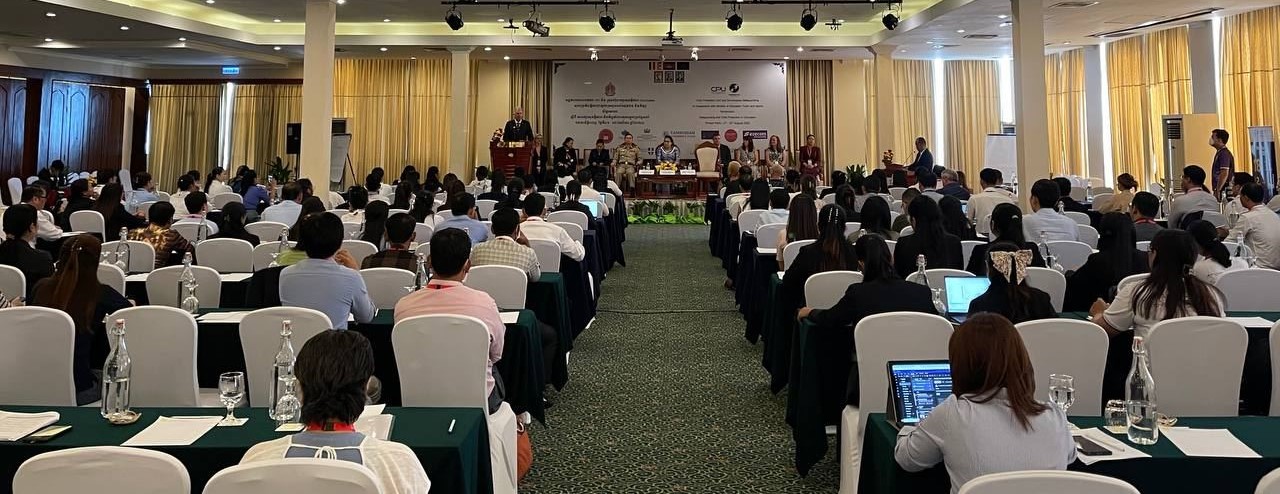
This week I was honoured to be a part of the first Symposium on Safeguarding and Child Protection in Education, held in Phnom Pehn in Cambodia, alongside Sian Jorgensen from Encompass Safeguarding and the Child Protection Unit a non-governmental organisation dedicated to helping the local police solve serious crimes against children.
On day one I trained 16 people from the Anti-Human Trafficking and Child Protection Unit of the National Cambodian Police, teachers, charity workers and representatives from the Ministry of Education and the Ministry of Womens Affairs, in Basic Psychological First Aid for Young People. This was a Training the Trainers course, meaning they will then be able to train their colleagues and other staff who may find it helpful. Psychological First Aid is a relatively new concept in Cambodia and I hope the training is cascaded to those who need it.

The conference started in earnest the following day with Sian training 130 teachers from 40 schools across the region, in Level 1 Safeguarding. teaching them how to spot if a child or young person is being abused and what they need to report to their designated safeguarding leads. She also had trained about 16 people the day before to be safeguarding trainers themselves.
On day two participants heard talks on the laws in Cambodia with regards to sexual consent and sexting, safer recruitment of staff, how to talk to children who are disclosing abuse, and from me, a presention on Peer on Peer Abuse with a focus on sexually harmful behaviors, and a talk on the importance of believing children when they disclose, and being mindful of our body language and tone of voice as to not victim blame or further shame children. The main points of my presentations are below:
Peer on Peer Abuse: Main Points
Responding to Children Who Have Been Harmed: Main Points
I had a great time in Cambodia and I hope that I am able to go back to build upon the work we started there. Many thanks to Sian for inviting me along, and to everyone at the Child Protection Unit for their amazing hospitality and for pulling together a packed conference in a few short months.
You can donate to the Child Protection Unit, through their parent NGO the Cambodian Childrens Fund here. They are a small team who help the Cambodian National Police to solve serious crimes against children. They also support child victims and their families by supplying basic foods, and help train the Cambodian Police Force in interviewing and forensic skills. They do amazing work for victims.

Many years ago I worked as a Sex & Relationships Outreach worker for a small team based within the NHS called Teenage Kicks. We did 3 sessions as a staple offer. One on self esteem and rights, one on relationships and one on contraception. I’m unsure where this exercise came from (my guess is probably something from Jo Adams) but it has been one that has created so many AHA! moments for both young people and adults, not only in terms of self esteem but also in recognising that we are not mind readers and cannot always tell why someone is behaving the way they are.
This is how I use the Cycle of Self Esteem (though sometimes I don’t call it anything):
Getting young people to understand not everything is about them:
One day I was talking with 2 young people at war. Previously the best of friends, each swore blind that the other had stopped speaking to them first. Turns out, Person A had went to talk to Person B between classes, and Person B had walked off and ignored them. Person A then believing Person B had stopped speaking to them avoided them and effectively stopped talking to them. Person B had no idea what happened. They were so caught up in worrying about a test they had the next period that they hadn’t noticed Person A trying to talk to them, all they knew is that their best friend stopped talking to them seemingly without reason. So they didn’t talk to them either. What they both thought “they’re not talking to me, what did I do wrong?” caused them both to avoid the other person. They laughed when they realised what had happened. I use this example often when people get stuck in the “its their fault”
Changing our thoughts & behaviour to support peers
Along the same lines, within Psychological First Aid Training for Students I ask young people to write down all of the things that someone might be thinking or feeling when they are having a bad day, We often get ideas such as feeling upset, or angry, thinking no-one likes them, or that the world is unfair. Then I ask them to consider how this may impact their behaviour – examples are usually things like withdrawing, not talking to people, acting moody or snapping at people. How might others think/feel about them? And how will that impact their behaviour? The reflection here for young people, especially those who are being trained to provide peer support, is to understand that how people behave is rarely about those around them, it’s about them. So if our first reaction is to believe it’s about us, we will often withdraw as well which may further impact how bad the person is feeling. If our thoughts are “they’re clearly having a bad day” we are more likely to ask if they are okay and what they need (which may be to be left alone which is fine). It also seperates us from feeling automatically responsible for someone elses behaviour and helps them to take responsibility for feeling better.
Helps young people to think about coping strategies & ways to change mood
We all have bad days, heck sometimes even bad years, and sometimes our behaviour can be less than pleasant. It is important to stress that no matter how we feel we are always responsible for our own behaviour. Understanding what we need when we are feeling down to help us feel better or to recharge, and verbalising that to friends and family is really important. If you know that you get really angry and want to argue and fight with people when you’re stressed out, perhaps trying a different strategy like taking a really cold shower or venting it all out on paper is better. And be upfront about it – tell people that this is how you feel and what you need to do to feel better. Have those conversations, otherwise people may think your mood and behaviour is all about them.
Humans are social creatures and we often make assumptions about people based upon how they behave. As a side note I’ve found that explaining that a child has, for example, ASD or ADHD, can dramatically alter other people’s perceptions of them in a positive way, as they no longer think of their behaviour as defiant or trouble-making. The belief that a child is doing a certain thing just to annoy you, as opposed to they can’t help their behaviour is a seisemic shift when it comes to how we behave towards them, and how they in turn feel about themselves.
Is this something you think could be useful in your work with young people? Or is this something you already use? Let me know in the comments
Living abroad can be both exhilarating and exhausting, and those who work or study in international schools often find themselves facing a continuous cycle of change and loss. In August there is a flurry of new faces, some incredibly excitable, some massively overwhelmed and others whose sadness from their loss of home drips from them like water, pooling around their feet. Students and staff wonder who are their people – who amongst these newbies will be their friends this year? Maybe they even signed up to be buddies keen to replace the friends they lost last year and are striving for connection.
Then just as the term starts to settle talk begins of contract renewals – who is up for renewal this year? Whispers about who is leaving and about who should probably leave as they clearly hate it but yet are still there year after year, hanging on for the cash while making themselves and all around them miserable…

By early term two, bang in the midst of newbie homesickness, the rumours start flying about who is going and where. We learn that that one family who has kept us sane for the past few years is moving to Europe to be closer to family or the colleague that keeps the department together is heading ‘off to new adventures and we wonder how we will cope without them.
The constant pinging of Whatsapp group expat sales groups between April and June provide the soundtrack to remind you that people are moving on. As the leavers panic about selling everything, the sadness sets in for those left behind.
The stayers start to try and make new friends with other stayers while their houses get fuller with reminders that the only constant in this life is change. The blender from the science teacher, a random assortment of cups to give to your new buddy, some awful picture that your friend clearly bought while drunk in Bali; houses haunted by the appliances of expats past.
And after the goodbye parties and half-hearted promises to always keep in touch you move onto the summer holidays before the rollercoaster starts again.
It may get to the point where you give up trying to make friends. That the loss of losing so many people you care about makes you reluctant to try again. It’s understandable, yet we all need connection – old hands and newbies alike. Unresolved loss can lead to us feeling depressed and thinking it is better if we just don’t even try anymore.
If this is you, please reach out for some support.
Would you like to know more about mental health? Love reading?
This year I have decided that I would like to read one mental health / self-help book per month. It started with looking at my bookshelf and realising I could do with some much-needed external pressure to make it through my TBR pile! Will you help me? You don’t need to read everything – just read along with the ones you are interested in. No stress, no pressure! We certainly don’t want you feeling more overwhelmed trying to ensure you read and finish everything. I should also admit I am a massive DNFer (did not finish); this is probably to do with the fact I have ADHD and if something isn’t interesting me enough it is almost painful to keep going! So rest assured I will try my best to ensure there isn’t any “dry” books this year.

This is where we start: “It didn’t start with you: How inherited family trauma shapes who we are and how to end the cycle” by Mark Wolynn. This has been on my TBR pile for a long time. Have you read it? If not will you read along?
Moving to a new country can be a thrilling yet daunting experience. For expats, the culture shock and language barrier can lead to feelings of loneliness, anxiety, and depression. As an expat living far from home, it is important to prioritize your mental health in order to have a successful transition abroad. Here are a few tips for staying mentally healthy when living abroad.
Prioritize Self-Care
Self-care is the practice of taking time out of your day to relax and do what makes you happy. This could include going on walks with friends or family, indulging in hobbies such as painting or playing music, or even treating yourself to a spa day. Taking care of yourself will help manage stress levels and increase your overall wellbeing while living abroad—so make sure that self-care is at the top of your list!
Find Support Groups
When moving abroad it can be difficult to find new friends and make connections with those around you. Thankfully there are plenty of online support groups specifically designed for expats who are looking for community and guidance during their transition period. Joining these groups can help you feel connected and build relationships with other like-minded individuals who understand the unique challenges that come with living away from home.
Seek Professional Help if Necessary
If you’re feeling overwhelmed by the changes associated with moving abroad, don’t hesitate to seek professional help. There are many mental health professionals all over the world who specialize in helping expats adjust to their new environment and manage any feelings of loneliness, anxiety, or depression they may be experiencing due to the cultural differences between their home country and their current location. Remember that seeking professional help is not a sign of weakness; rather it’s a sign that you recognize how important it is to take care of your mental health while living far away from home.
Conclusion
Moving abroad can be both exciting and intimidating but by taking care of yourself, finding support groups online, and seeking professional help if necessary, you’ll be able to tackle any challenges that come up during your transition period so that you can focus on enjoying all the amazing opportunities that come with being an expat! With these tips in mind, there’s no reason why you won’t have a successful transition period while living far away from home! Get in touch if you would like to set up a free initial appointment.
This is a little video I made a while back for my students when I worked at JIS. Use Radical Acceptance when you can’t problem solve a situation or change how you feel about it.
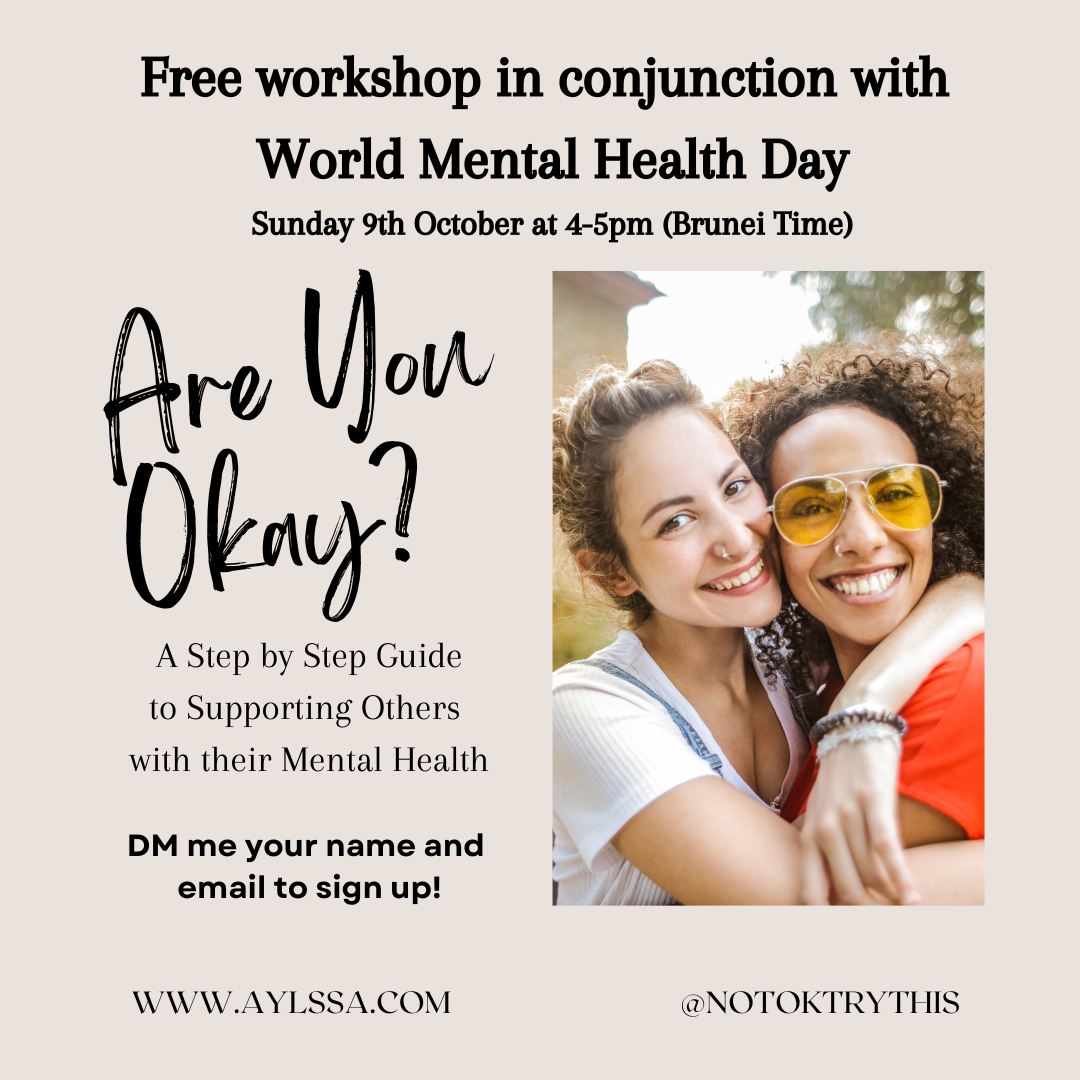
In conjunction with World Mental Health Day I am offering a free online workshop on Sunday 9th October at GMT+7 (4-5pm Brunei/Singapore/China, 3-4pm Thailand / Malaysia, or 9am in the UK). The workshop will focus on how to tell if someone you care for is not doing ok and what you can do to help.
To sign up please fill in your details below and I will send you the link
 Aylssa Temple