I have recently launched a podcast with the aim of giving evidence based strategies for improving mental health and well being in episodes of less than 10 minutes in length. You can listen to it via the Podcast page or subscribe to it here. I hope you find it useful.
Category: Uncategorized
Why we need to have a conversation about sexual pleasure and consent
Back in 2013 I was interviewed by Brook at a conference at UCL about the importance of talking about sexual pleasure as part of Relationships and Sex Education.
It seems like we need to have this conversation again in light of the #metoo movement and Everyone’s Invited, both highlighting the wallpaper of sexual violence that (not only) young people face.
The full video is above.
New Training Courses
I am pleased to announced I am now an accredited trainer through Nuco Training UK, and able to deliver the following courses both in person and online.
First Aid for Mental Health
- FAA Level 1 Award in Awareness of First Aid for Mental Health
- Award in Awareness of First Aid for Mental Health at SCQF Level 4
- FAA Level 2 Award in First Aid for Youth Mental Health
- Award in First Aid for Youth Mental Health at SCQF Level 5
- FAA Level 2 Award in First Aid for Mental Health
- Award in First Aid for Mental Health at SCQF Level 5
- FAA Level 3 Award in Supervising First Aid for Mental Health
- Award in Leading First Aid for Mental Health at SCQF Level 6
Safeguarding Children & Vulnerable Adults
- Level 3 Award in Principles of Safeguarding and Protecting Children, Young People or Vulnerable Adults (RQF)
- Level 1 Award in Awareness of Safeguarding (RQF)
Please get in touch if you would like to arrange a training course for your staff.
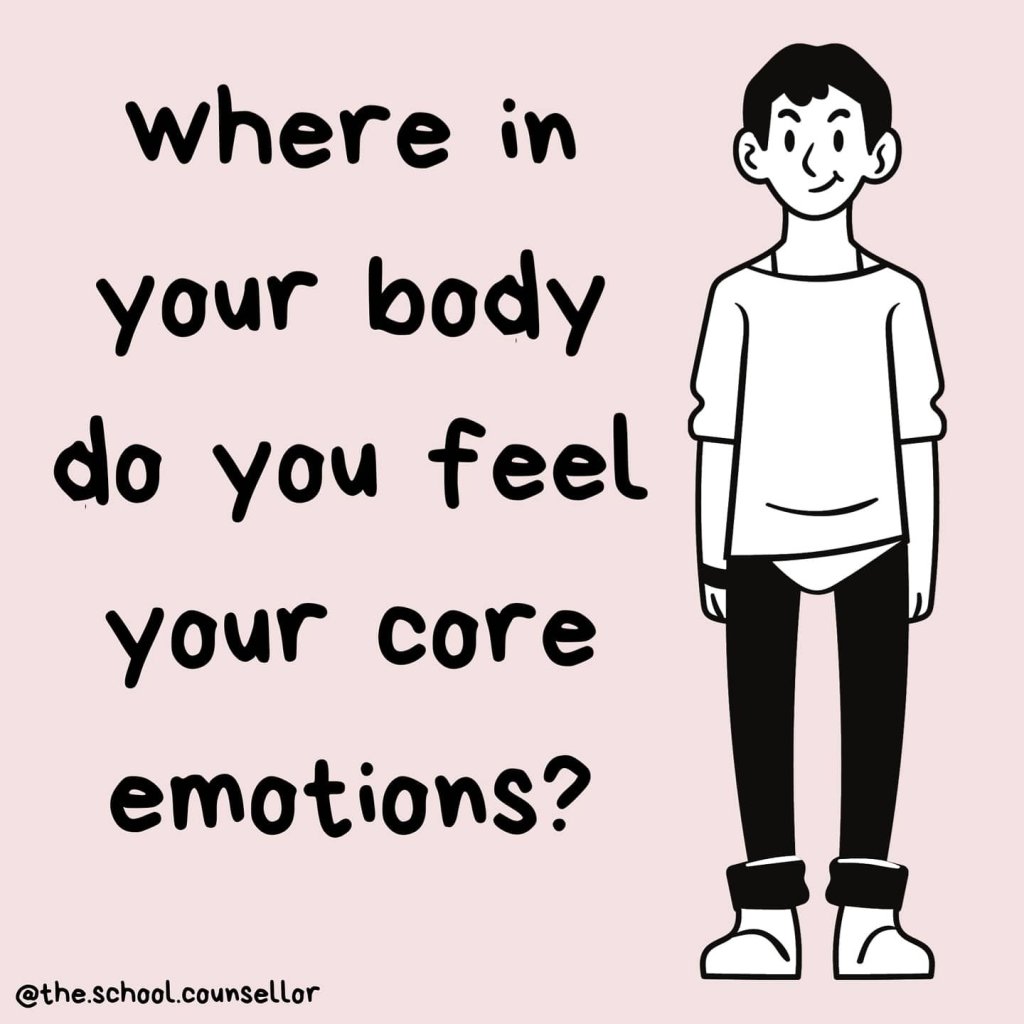
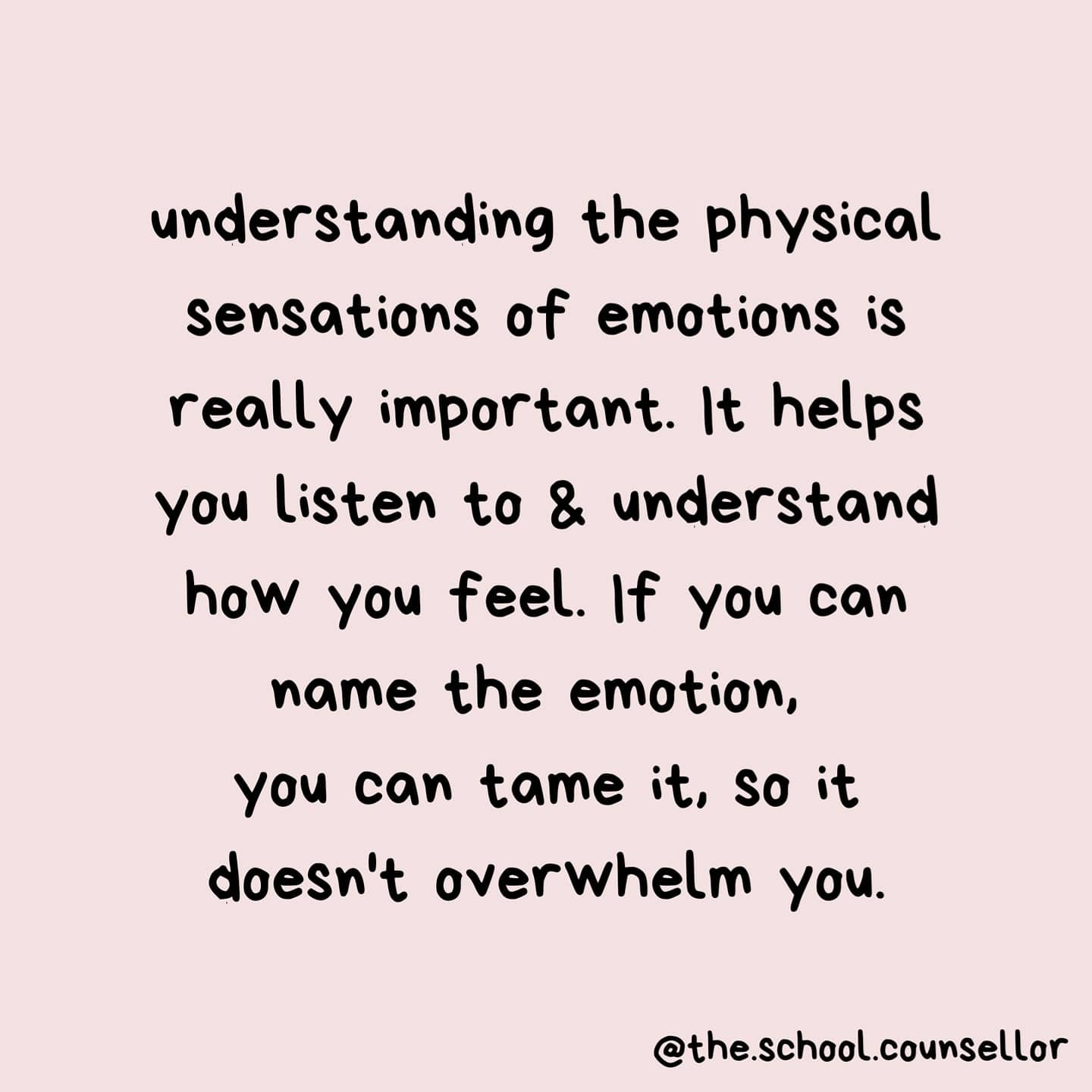
Physical Sensations of Core Emotions
When someone has crossed a line
If you feel uncomfortable, upset or angry when someone does something, chances are your boundaries – the actions you will tolerate towards yourself – have been violated. Some of us don’t want to challenge that person because we hate conflict. Some of us think that if we show them we are unhappy they will understand and not do it again. It doesn’t work. You need to be explicit and here is how:

For example:
I felt uncomfortable when you criticised me in front of my friends.
I would like you to talk to me in private if you need to tell me something.
If you continue to criticise me in public I will no longer be friends with you.
OR if you no longer want to be friends: to protect myself I will no longer ask you to come out with me.
A little bit deaf
About a month ago I was diagnosed with mild to moderate SNHL which means, in a nutshell, I am a little bit deaf. In both ears.
It is something which normally happens as we get older, it’s just mine was accelerated a bit. Cos clearly at 39 I’m still young! Well according to the Audiologist – who I clearly liked!
But what is, is. It’s not like I didn’t know it, not really. I’ve known I find it difficult to hear people speak when I don’t wear my glasses for years. Like it must be at least 15 years ago I first noticed it. My contact lenses had fallen out at work and I had to get within a metre of young people to understand what they were saying. (FYI that’s a lip reading thing NOT a woah the vibrations through my glasses help me hear kinda witchcraft).
So anyway after Jason telling me I was deaf for years, the hearing test finally confirmed it. Bilateral SNHL.
Basically I can’t hear you if you whisper. And sometimes if there’s too much background noise. I also can’t hear you if you cover your mouth then you speak. Also, apparently I have problems with the letters S and F and th sound meaning I may mishear you and make stuff up in my head. So sorry about that, please bare with me.
Today I’m trialling a hearing aid. I’m hearing sounds that I only just realise now that I haven’t heard for years. The opening of a cigarette packet, the whirling of overhead fans, the mutterings of Jason…
Only around 1 in 6 people who need one will get a hearing aid. I get it, glasses are acceptable; hearing aids aren’t. Many people do not want the world to know that they are disabled. Or old. Theres stigma. There’s not wanting to be treated differently. Or its vanity. Whatever.
Since telling my friends I’m a bit deaf, three people I know have told me their story. We are all around 40. We all have hearing loss akin to people at least 20 years older. So theres more of you. I know there is. We were born around the time the Walkman was invented. We laughed in the face of the warnings that told us to turn down our music. We danced by the bass speakers in drum n bass clubs. We never thought we’d get “old”.
There are so many people hiding their hearing loss so please, you people with perfect hearing… if you are given the option… ALWAYS use the mic.
Grief & Living Away
Grief is a funny old beast, usually reserved for loved ones who die, but can also sneak up on you for people who have left, for an incarnation of who you once were, or for a place or time when things were good; different. Living away from home can sometimes seem to be a never ending cycle of grief, renewal, loss & hope.
In many ways we are really privileged. There are reasons many of us came to where we are – usually the employment opportunities and pay is better than in our home countries, for one or both of us. Our Instagram feeds are filled with photographs of far off destinations that we are blessed to be able to travel to because of proximity, low cost and said better pay. Even when we’re not on holiday, we often live in countries where the sun always shines, looking like we’re having a fabulous time. According to our Instagram feeds. And it feels somewhat spoilt to talk about the other side of living away. Because living away is a choice that we make. We are not fleeing war or persecution. We’re looking for jobs, opportunities, adventures… no one forced us here. Even those of us whose employers told them they had to move had the choice to look for alternative employment. Granted the alternative could be unemployment in our home countries, but it’s still a choice and one that lots of people left behind may also make if afforded the opportunities we had.
But yet still. Despite how shiny our lives look there is an undercurrent. An undercurrent of not quite fitting in. Of finding people we connect with, who we love, who become family, who move on. People who inevitably leave. It’s like falling in love then losing that person year after year. When you stay in your home country, your family & your friends (for the most part) remain the same. Abroad we try desperately to make a connection to then find it’s ripped away. We find someone we want to hang out with, then discover they are leaving 6 months from now.
Some of us grieve for who we once were. We might have been someone in a previous life. We may have had a career, aspirations, achievements that other people knew us for. People knew our story. Yet when we move we are a story that hasn’t been read yet. A book maybe people aren’t too interested in. A book that has been placed on a shelf way at the back, that perhaps can’t be bothered anymore to try and be read.
With every move there are gains. And with every move there are losses. Unresolved grief can strangle us into depression and unsurprisingly many people who have moved multiple times can find themselves suddenly and unexpectedly mentally unwell. On top of this can come guilt for being ungrateful for the life you have. How can I be unhappy when I have all this? Why am I constantly angry even though I have all this? Which can send you spiralling further…
It’s okay to grieve and not feel okay. Talk it out with someone if you can. Find a therapist who understands transition and unresolved grief. Make a list of everything and everyone you’ve lost along the way – acknowledge what they meant to you & say your goodbyes again. Give yourself time to heal.
Sentence Starters are…

…great for getting people talking.
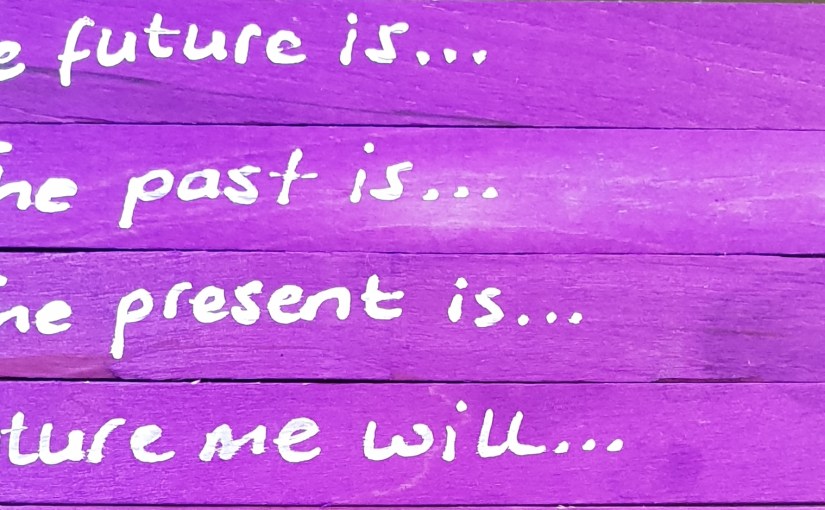
I bought these coloured lolly pop sticks a little while ago & finally got around to writing on them today. Each stick has the start of a sentence on it which the young people can finish.
Ideally they shouldn’t think too hard about what they answer. A way to do this could be to give them a sheet of paper & ask them to write down the first thing that comes into their head.
You could do a similar thing if you are into journaling and want random topics to write about. You could write things like – love, politics, family, religion, hope, tragedy, fulfilment etc on them and pull them out at random. You could colour coordinate them as well, so the yellow ones could be internal emotions say, the orange could be about relationships, blue about the world, green about self etc. The questions or topics you devise will depend on who is going to use them and for what purpose.
Mine will be used in counselling with young people so explore a range of emotions, wishes and coping strategies. What will you use yours for?
Thinking about Consent

“When we don’t consent to flirting, when it’s not reciprocated and it’s repeated, it is harassment. Hissing “slut” at women is harassment. Rape threats online is harassment.”
A contribution by Aylssa Cowell
There are only two legitimate reasons for sex: fun or procreation. I cannot think of any other circumstance for it to be okay if it is not fun. If it stops being fun, then it should stop too, unless you’re desperate and are both consenting to get pregnant.
Sex should never hurt.
Consent cannot be given if the person is asleep, passed out, or if you are threatening or hurting them to comply.
But then most sexual assault and rape is about power, not sex. Assault of the sexual kind is about getting what you want, about getting yourself off, your own selfish wants and desires with complete disregard of the other person or people you’re doing it to.
—–
“No.”
“Stop.”
Both are such simple words, but when it comes to sex, they are sometimes difficult to say. Worried about what will happen if we say ‘no’ and they go ahead anyway, or worse? We’re always thinking three steps ahead. “If I say no, what are the consequences? What about this? If I show them, I’m not into this, they will stop. They’ll have to stop… right?”
But when unable to voice ‘no’, we scream it with our body language. We throw off signs like:
becoming still,
not responding,
turning away,
face dropping,
looking unhappy,
we’re just not into it… you can see we’re just not into it… we are hiding in our minds wanting it to be over,
please just hurry up and let this be over.
“But if they weren’t into it, why didn’t they fight back,” others will judge later, “Surely, they would’ve fought back because that’s what I would do.”
That’s because so many of us do not that that the common response to trauma is to freeze.
—–
Too many of you reading this will have your own stories. That time when…The repeated abuse when…
Please know that you did not deserve it and you are believed. The World Health Organisation estimates that worldwide 20 to 25 percent of women and 10 to 15 percent of men will be victims of sexual violence in their lifetime. More will be sexually harassed. How many of us have been creeped out by someone’s behaviour? When does flirting tip over into harassment?
The simple answer is consent. When we don’t consent to flirting, when it’s not reciprocated and it’s repeated, it is harassment. Hissing “slut” at women is harassment. Rape threats online is harassment. Being touched without consent is assault. Are you aware the Brunei Penal Code protects you from this? That there are actual laws in place to help you should you choose that route?
It doesn’t matter what your relationship status is, no one has the legal or moral right to demand any sexual contact without your full & enthusiastic consent. Lack of consent = sexual assault / rape.
Sexual consent should be given freely, it should be informed, reversible and it should be enthusiastic. And it is up to you, regardless of gender, to ensure that your partner consents fully. Just because we agree once to something doesn’t mean we have to do that same thing again. Just because we do one thing doesn’t mean we have to do the next.
So, what does enthusiastic consent look like in real life?
It looks like enjoyment.
It looks like smiles and laughter, and pulling closer.
It sounds like ‘yes’.
It considers all forms of communication – the words that we say, how we say them, and our body language. It checks that all of these are in alignment – that they all are saying ‘yes – this is fun’. It takes into account that a slight push away of the wrist or a turning away of the head means ‘I’m not into this’.
It verbally asks, ‘is this okay?’
____
First published by the Songket Alliance here
Training RSE in Asia
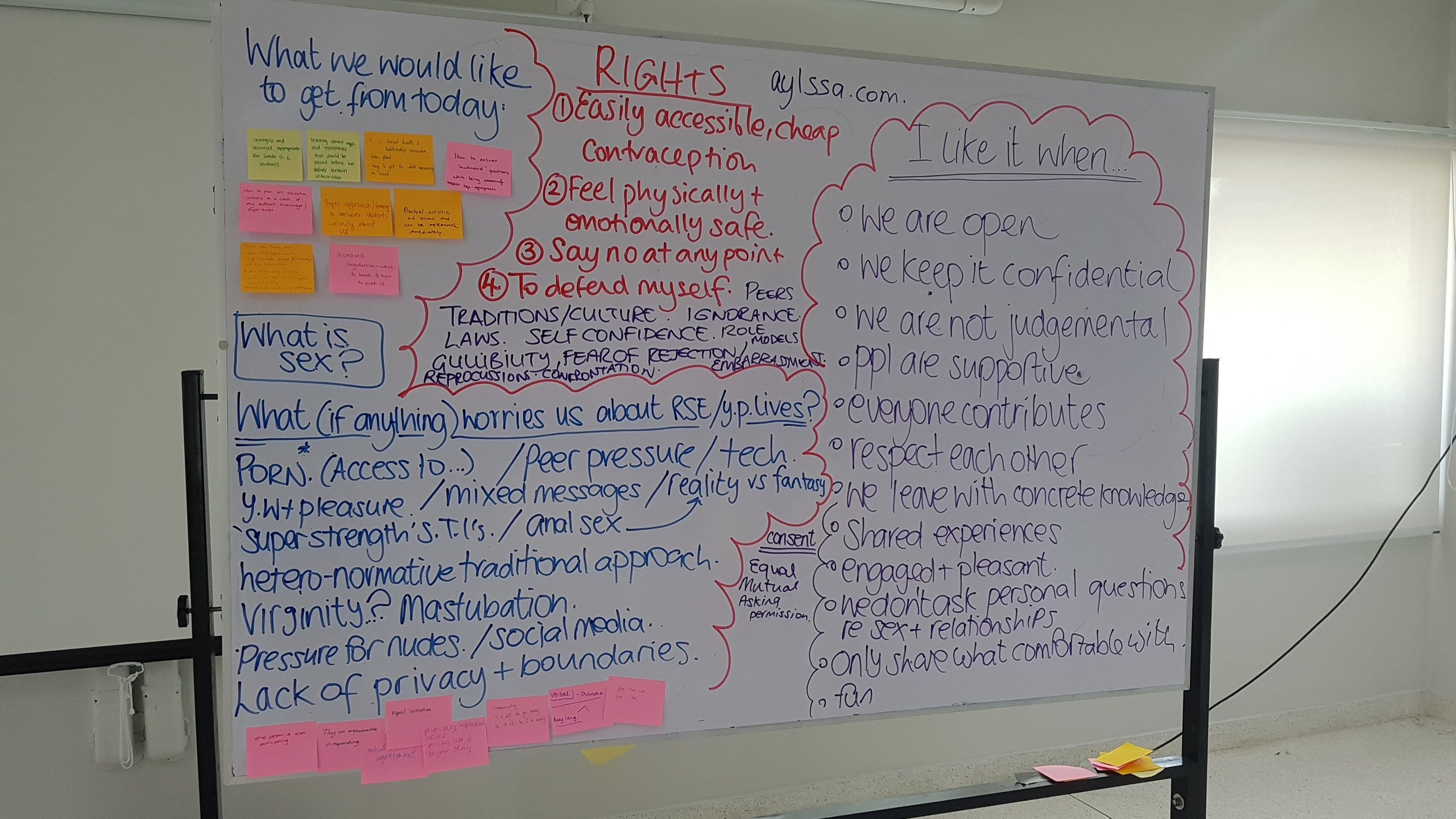
Relationships & Sex Education was a massive part of my previous work history. Until I moved to Brunei in 2014 I trained professionals in the UK in loads of different courses freelance or in partnership with the NHS. Since I’ve been out here I haven’t done much sexual health training at all. Maybe once a year.
Today I had the absolute privilege to facilitate training with professionals from Thailand, Singapore & Hong Kong looking at comprehensive sexuality education. It was a hilarious, laughter filled day discussing serious issues and ways we can help young people navigate the complexity of growing up.
I wish all the best to the participants & hope they go back to their respective schools with ideas & the momentum to inspire change.
And it has renewed in me why I am passionate about this subject and being an alternate source of education than the internet for young people.
 Aylssa Temple