On 23rd September 2025 I delivered a webinar to 126 people from 14 different countries about what I had learnt so far on my doctoral journey. You can watch at the link below.
Let me know your thoughts in the comments!
On 23rd September 2025 I delivered a webinar to 126 people from 14 different countries about what I had learnt so far on my doctoral journey. You can watch at the link below.
Let me know your thoughts in the comments!
Clinical supervision, although recommended by both the Australian Counselling Association and the British Association of Counselling and Psychotherapy, is not always provided for international school counsellors by their respective schools.
Clinical supervision is the process whereby a School Counsellor has confidential space once a month, usually for 90 minutes to discuss, evaluate and gain guidance on interventions for student issues. Not only this but Clinical Supervision is a way to ensure the mental health needs of your School Counsellor are met – helping them to process some of the emotional impact and secondary trauma of working with complex cases, and ensures, as far as possible, that they are fit to practice and are working safely with your students.
School counselling can be a lonely job. Due to it’s mainly confidential nature, counsellors do not always have someone they can offload to within the school and therefore the senior leadership team don’t always understand the realities of their role. So what do International School Counsellors bring to supervision? In terms of student issues, these are the top 5 for my supervisees:
School safeguarding, within the context of international schools, encompasses a broad range of practices and concerns aimed at protecting children’s health, well-being, and human rights. Initially, the focus of safeguarding in these settings was primarily on preventing sexual abuse by educators through measures like safer recruitment and criminal background checks. However, this understanding has significantly broadened over time to include other forms of harm and comprehensive well-being. The evolving scope of safeguarding in international schools now covers:
• Harm between children (peer-on-peer abuse)
• Affluent neglect
• Online harm such as bullying, sexual harassment and exploitation
• Identity-based harm such as racism, Islamaphobia or homophobia
• Student mental health and well-being, including issues like suicidal ideation and self-harm
• The impact of transition on well-being for internationally mobile students (Third Culture Kids or TCKs)
•Fostering a sense of belonging and respectful, trusting relationships within the school community.
This broadened approach also recognizes the interlinkage with data protection and the need for whole-school strategies.
Challenges to Safeguarding in International Schools
International schools, despite often having significant resources, face unique and complex challenges in implementing effective safeguarding practices due to their diverse populations, mobile nature, and varied legal and cultural contexts.
Affluent Neglect:
This is a particularly challenging area, as affluent families are often perceived as “low risk”. However, children in these families can experience severe emotional neglect due to parental isolation, excessive pressures for achievement, and a focus on material provision over emotional needs. This neglect is often masked because physical needs are met. Independent boarding schools may struggle to identify these children as being “in need or at risk of significant harm, and designated safeguarding leads (DSLs) can be reluctant to raise concerns due to parents’ transactional arrangements with schools or their power and influence.
Peer-on-Peer Abuse:
There is limited academic research specifically on peer-on-peer abuse in international schools. Forms of harm include cliques, gossip, anti-snitching cultures, sexual harassment and assault, peer pressure, social exclusion, physical assault, and specific issues related to nationality hierarchies or geopolitical tensions. Addressing harm that occurs outside school premises, including online, is complex and unclear, with many schools lacking adequate policies or legal clarity on their intervention scope.
Cultural and Legal Barriers:
International schools operate across 159 countries with diverse cultural and legal contexts. Conflicting cultural norms around discipline (e.g., physical punishment), care-giving, sexuality, and reporting can cause confusion and undermine safeguarding efforts. Some laws criminalize behaviors like certain sexualities or mental health issues, increasing student vulnerability and schools’ reluctance to report.
Relationship with External Agencies:
Many international schools are isolated from their surrounding communities and local agencies, operating in a “grey legal and political area. There can be a lack of trust and cooperation with local law enforcement and child protection services, with some agencies perceived as ineffective, corrupt, or even potentially causing greater harm to the child if abuse is reported. This leads schools to manage issues internally or rely on embassies and NGOs instead of statutory services.
Parental Power and Influence:
Affluent and influential parents can exert considerable pressure on international schools, sometimes undermining investigations or demanding specific outcomes to protect their family’s reputation or status.
Transitions and Staff Turnover:
Frequent student mobility (TCKs) and high staff turnover can hinder the development of trusting relationships and effective information sharing, making it difficult to identify patterns of harm or transfer safeguarding concerns between schools.
Application of Western Models:
Many international schools apply child protection models that originate from Western countries (e.g., UK, US, Australia), which may not align with local cultural and legal contexts. This can lead to resistance from local parents and professionals, perceived as a “western imposition,” and may be less effective than culturally contextualized approaches.
Safeguarding Practices and Enablers
Despite these challenges, international schools employ various strategies and leverage specific roles to support safeguarding:
Role of Counsellors and DSLs:
School counselors are identified as key personnel for supporting students’ unique developmental and mental health needs, particularly TCKs. They are often seen as trusted adults and play a critical role in developing and delivering student education and transition support. However, clarity on the division of roles and collaboration between counselors and Designated Safeguarding Leads (DSLs) is important. DSLs are responsible for overseeing safeguarding, and strong leadership by principals and DSLs who prioritize safeguarding and empower staff is a powerful positive force.
Policies and Procedures:
Clear, written safeguarding policies and procedures are crucial. Centralized, digital record-keeping systems for safeguarding concerns help identify patterns and intervene early.
Student Voice and Education:
Involving students in co-constructing safeguarding strategies and providing education on topics like consent, healthy relationships, and online safety is vital. However, time and resource constraints can be barriers to effective curriculum delivery.
Team Approach:
A team approach to managing safeguarding concerns, involving multiple professionals, is valued as it shares the burden and strengthens practices. Regular multi-disciplinary meetings help discuss student concerns.
Networks and External Support:
Engaging with local networks of international schools, international accrediting bodies (like CIS), training providers, and other external organizations provides valuable guidance, support, and external validation. Building relationships with individuals in local law enforcement, child protection agencies, and community-based NGOs can also strengthen practices
Culturally Responsive Strategies:
Developing strategies to work in partnership with families on sensitive issues, such as physical discipline in the home, by aligning with school values and educating parents can be effective15221. The need for cultural matching and contextualization of safeguarding approaches is particularly strong when Western professionals serve non-Western communities19….
In conclusion, school safeguarding in international schools is a complex and evolving field, moving beyond traditional concerns to encompass a holistic view of child well-being. While progress has been made in establishing foundational practices, significant challenges persist, particularly related to the unique cultural, legal, and social dynamics of globally mobile communities and the influence of affluent families. Addressing these challenges requires culturally informed, collaborative, and adaptable approaches, along with continued research to understand the diverse experiences of students and optimize safeguarding interventions.
I sat in the tree and started panicking about how I was going to get down. My 8 year old legs dangled off the sturdy branch but I was too scared to stand up to turn around to go back the way I came. My little brother climbed trees all of the time – right to the top – neighbours often left their houses to shout at him to get down, as he swayed on tiny branches. There was no way any of the adults could climb that high and they probably realised if he got stuck, like a cat, the fire brigade would have to be called. It was a skill that would have been revered in the Pacific islands where coconuts needed to be cut down; in northern England in the 1980’s not so much. I also wanted to be able to climb trees but was nowhere near as fearless as he was.
The ground looked so far away. I felt like I was on top of a huge cliff and I was convinced I was going to die if I jumped. Thankfully none of the 15 or so feral kids from our street were there to see my cowardace. I am pretty sure if they were they would have climbed up behind me and pushed. I close my eyes, take a deep breath and jump.
The blood was fairly instant and its metallic taste flooded my mouth. I had hit the ground hard and my rabbit like big teeth had exploded through my bottom lip as I landed. Bursting into tears I ran the 10 metres or so home to get help. Reassured I wasn’t about to die, the bleeding eventually stopped and I ended up with a bottom lip influencers now could only dream of.
I didn’t climb that tree again but was hanging off underpasses a couple of years later dropping the three metres or so to the ground when my finger tips couldn’t hold on any longer. I have another memory of dangling upside down on a kids climbing frame at twelve, right on the cupse of teenagehood and self-conciousness.
These little big risks shape kids sense of danger and confidence. Although it didn’t end well I couldn’t help but be proud that I did it – I climbed that tree! Yes I got hurt when I jumped off but I never jumped with my mouth open again. The no nonsence mopping up of the blood by my parents probably helped a lot. Fix it up, go back out to play. Our house, probably like many in the 1980’s, always had a supply of medical tape and steri-strips, aka paper stitches, as there was always one of us “feral” children bruised and bloody from stuff we got up to.
I also remember turning about ten years old and sitting in our porch surrounded by kids while I tried to beat my score on Tetris. We had a Gameboy and all of the kids wanted a go. I was reigning champion but my competition was fierce. We all got one or two shots each then we went back outside to play run around the block or something similiar. We had other options – electronics were just one part of what we could do, and that is how it should be now. Phones, video games and other devices have a place in childhoods, but kids shouldn’t only have this as an option. They need time to socialise, to run about and fall over, to make up games with ridiculous rules that no adult would understand, to learn all of the soft skills they need – how to stand up for themselves, how to be creative and how to problem solve getting stuck up trees.
I opened one of my uni notebooks yesterday and chuckled loudly. In November last year, a couple of months into my doctoral program, I had come across a narrative exercise which asks you to think about your life in terms of chapters and what they would be called. I found it quite a fun thing to do, and it helps you narrate your life on your terms. You could do it for any big events in your life – parenting, relationships, studying, career changes or even just naming the year you’ve had. In particular, this exercise was looking at jobs – this is what I wrote:
| Age | Job | Chapter Title |
| 16 | Pub DJ (it was the 90s…) | Play David Essex for me… |
| 17 | Telesales | Hidin’ in the Booth |
| 18-20 | Customer Service Operator | The Toilet Button and Other Tales of Woe |
| 21 – 24 | Detached Youth Worker | Wandering the Streets |
| 22 – 26 | Drop-in Worker | Condoms, Chlamydia & Conservative Christians |
| 27-30 | Charity Management | I really like Spreadsheets, no really I do |
| 30 – 31 | Charity Management | Life on a Dot in the Middle of the Ocean |
| 31 – 32 | Sexual health outreach worker | Trundling with the Trolley |
| 33 – 42 | International School Counsellor | Repeat after me: Thoughts are not Facts! |
| 42 – 44 | Business Owner | Stop trying to kill me, Thailand… |
I had to chuckle after the last one. I had no idea that this year I would survive ovarian cancer while still here in Thailand. Maybe I jinxed myself by calling this chapter that!
Do you think this could be an interesting exercise for you to do? Let me know how it goes, and I wish you call a lovely 2015.
Wellbeing Challenges of International School Counsellors: Research Findings I have recently been trawling the internet for research articles for my doctorate in safeguarding in international schools, and I came across this article: ‘A phenomenological analysis of the role and wellbeing challenges experienced by professional international school counsellors‘ by Scott Langston and William Van Gordon published in the British Journal of Guidance and Counselling (4 Oct 2023). Despite a gobful of a title, it actually has some pretty strong themes that I hear a lot in supervision sessions and in group discussions at our annual conference. Conducting semi-structured interviews with 8 professional international school counsellors, the authors found 3 main themes: I’ve only got one pair of hands! This theme related to workload and how school staff did not always fully understand what our job is Empathy is a two way street This related to the value of interpersonal relationships and online support with peers and other mental health professionals – we need help too! A balancing act We need to keep up regular healthy habits and have social connections. What was really interesting to me was the similarities between what I hear as a clinical supervisor, how I felt as a school counsellor and the research. I would often say to my counselling colleague that no-one really understands what we do as counsellors in a school, until they are pulled into one of our crises and into the vortex. The lack of understanding of the role of school counsellor means for some people they are used an extra teacher – covering lessons, doing playground duties, coaching sports teams and various other things. There was also a lack of a detailed job description for some counsellors meaning it was difficult for them to maintain boundaries and have other staff really understand what they do, including the many hours they spend, not only talking to students but also to teachers and parents. There was also a sense of isolation for many of the participants, and a need to come together with other international school counsellors. The strategies that Langston and Van Gordon (2023) suggest are as follows with a few reflective thoughts: The Role of the International School Counsellor There should be a baseline job description that could be adapted to local schools and circumstances. I think this could be particularly useful for schools that do not work to the American or ISCA model such as Social and Emotional Counsellors in British Schools. Clarify the extent to which counsellors are expected to do non counselling duties. Without a very specific job description this may be difficult. It would also be useful to write these as blocks of time? Allow counsellors to manage their own time. Make the role clear to the community. How do you describe and inform teachers, support staff, parents and senior management about your job? Direct Support International School Counsellors should be encouraged to network with others in the same role through international conferences, training and online groups. You can find out more about our annual conference and join our facebook group here. But more locally, can you set up or attend a group for international school counsellors in your city or country? Clinical supervision is a must. I would also argue that having a supervisor with international school experience is incredibly valuable. You can find a list of supervisors here. Develop school crisis plans in advance, so if the worst happens it doesn’t all land on the counsellors head. Do you have crisis plans in your school? Or procedures about how to work with serious cases? Does everyone know what they are supposed to do in an emergency? Schools should conduct exit interviews to establish what may need to be put in place for the incoming counsellor. How does your school do handovers? Do they do exit interviews and do you feel comfortable enough to be honest? Facilitating Habits Schools should consider providing facilities or memberships to enable regular exercise. Does your school provide this? Use external faciliators for staff wellbeing days so the school counsellor can also learn as a participant instead of always leading. Do you feel your school has training or wellbeing days that are useful to you? Encourage healthy boundaries – e.g. no out of hours emailing. I would also encourage taking your work emails off of your phone entirely. If you are needed in an emergency they can always call you. How do you enforce healthy boundaries at work? There are lots of things to think about as we head into the school holidays, and if we reflect and find that there are some things we might like to change for the next academic year, we can start planning how we are going to do that. What do you think should also be included in the list?
Wellbeing Challenges of International School Counsellors: Research Findings
I’ve been reading a lot around child protection recently because of my doctorate, and I found the idea of guardianship to be interesting. As a former Designated Safeguarding Lead (DSL) in a school, I always found it curious that the same people would report time and time again, different instances and different concerns about children, whereby other staff would see the same thing and not report at all. This is called ‘the rule of optimism’ – the thought of ‘what if I am wrong?’ As a DSL I loved getting cases that turned out to be nothing – my most memorable was a youngster with Mongolian Blue Spot, a form of birth mark that looks like major bruising. It doesn’t matter that no further action was needed and I had spent time figuring it out – what mattered what the staff member cared enough to report.
The Australian Royal Commission investigated widespead child sexual abuse and how institutions dealt with it when claims came to light. I came across an article by Lockitch et al (2022) entitled ‘Why Didn’t they Intervene? Examing the Role of Guardianship in Preventing Instititional Child Sexual Abuse’ which I think could be really useful for schools to consider.
The authors used Routine Activity Theory, to examine the findings. This theory claims that crimes occur when there is:
A guardian in a safeguarding context could be anyone who witnesses or becomes aware of child abuse. However, to be effective, that guardian has to have a willingness to supervise, the ability to understand what is happening and also the willingness, which includes the confidence and skills, to intervene.
Willingness to Supervise:
This refers to someone else who is in the same physical space as an offender and is attentive to what they are doing. They must be able to notice when someone is acting in a manner that may constitute abuse. In the Royal Commission, witnesses who saw a teacher hold children on his lap behind his desk (where sexual abuse took place) did not report this. Moreover, although this was not studied in this research, lots of the abuse took place in front of other children. There could be scope for empowering children as guardians; or certainly an argument that young children should be taught about abusive behaviours and who to talk to if they see something/need help. From working with survivors of sexual abuse, many were abused for years before they realised that this was not normal or okay; they would’ve asked for help sooner if they knew.
Another issue was that the staff:child ratios were not upheld, so offenders often were left alone with children despite this being against school/institutional policy. I would argue having and sticking to staff:child ratios also protects the staff from unfounded allegations as well.
Willingness to Intervene:
If a guardian observes something concerning then they have to make a choice – do I act on what I saw or not, and if I act what do I do? Do I report this to my DSL? Do I speak to the child? Do I confront the adult? Many things can impact this decision.
In the case of William Vahey (the Serious Case Review is here) when teachers reported his suspicious behaviour, this was not acted upon, and when they confronted him directly he would point out that he was, basically, adored by the Board of Governers so they were risking their jobs should they report him. He drugged and sexually abused 100s of young people over a 40 year international teaching career. This has happened time and time again; there can be a diffusion of responsibility – if everyone knows that someone is ‘dodgy’, no-one reports. Maybe they don’t think it is their responsibilty, or maybe they think ‘surely someone else has done it‘.
In the Royal Commission, a sports coach was nicknamed a ‘paedo’ by the kids, and adults would routinely joke that they wouldn’t want to left alone with him. Turned out they were right, he was actually sexually abusing children, but no-one reported it.
These power dynamics, organisational norms and fear of consequences can all impact on whether your staff tell what they see. They need to be able to trust their gut, and be confident that leadership will take what they see seriously.
Capability to Intervene:
This involves guardians knowing what to do and who to report to. Many people in the research were unfamiliar with the reporting structures, or who in the organisation to talk to. Many were given the Child Protection policies to read, but hadn’t done so. Capability to intervene also includes their perception that they can actually intervene and make a difference, which in turn affects their willingness to get involved. Imagine in an international school reporting powerful parents for example, or thinking that, well this is just what happens in this country.
In my own conversations with teachers worldwide there can be a lack of understanding about country laws, and a misperception that ‘there are no laws to protect children here’. When I have done a (usually very quick) google search, I have always found said laws. The laws are there because most countries have signed up to the UN Convention of the Rights of the Child, and Article 19 urges governments to put in place laws and agencies to help protect children from all forms of violence.
This is also why it is so important, you undertake regular child protection or safeguarding training with your staff and you inform them of the laws in the country in which they are teaching. Getting them to do online child protection training from a UK provider does not give them the local knowledge and understanding to be able to believe that they are capable of making a difference to a child.
Finally as a reflection, I would like to ask schools and youth organisations to consider what the point is of their child protection policy. Do you have it to tick some boxes? Do you have it so you can collect information about children’s lives? Or do you have it because you want to actively keep children safe from abuse and harm?
Listen to children and young people when they tell you things – sometimes what they see is hidden from adults. They may use jokes to tell you. We know that, like in the case of William Vahey above, sexual offenders don’t just groom children they also groom adults as well.
Take all allegations seriously.
And finally don’t ask yourself ‘what if you’re wrong’, instead ask what if you are right?
When you think about ADHD – what springs to mind? For many people a white boy bouncing off the walls in a classroom is what they think of. We don’t often think of the chatty girl in the corner, or the one who spends her life seemingly daydreaming or can’t find the words she wants to say. Like with Autism, girls are more likely to be misdiagnosed with anxiety or depressive disorders than as neurodivergent.
I’ve had many a conversation over the years with professionals and parents who don’t think a diagnosis is necessary because they don’t want a child ‘labelled’.
Put yourself in the child’s position: What happens when you don’t understand why you are being rejected by your peers because you are ‘too much’ or can’t remember birthdays or do those lovely friendship maintainance things? What happens when you spin into anxiety because you can’t remember to pack the things you need for school and the teachers spend a lot of time telling you off? How do you comprehend the deep physical pain you feel when trapped in a boring classroom listening to an uninteresting teacher? How do you understand that sometimes you can do a lot of work, but other times you cannot muster any energy to pick up a pen? How do you feel when you get told off for the zillionth time for being late, or making too much noise, or zoning out…
What if you label yourself as stupid or lazy, instead of neurodivergent?
ADHD is more than just school – we know now it is lifelong, and not episodic. The idea that people will ‘just grow out of it’ has been shown not to be the case for the majority of people. Things may become easier for some people when they have the right coping strategies, or perhaps they have learnt to mask away their symptoms, but this does not mean they are ‘fixed’.
ADHDers can sometimes get themselves through school because they have the supports, but fall apart at university, or when they start relationships or have the extra pressures of having a family. The coping strategies and behavioural modifications that have worked so well in the past don’t work as well as they did and they can fall apart. Getting them to the end of school is not the end-goal. We need to start taking it a little more seriously – did you know, for example, that people with untreated or undiagnosed ADHD on average live 10 years less? We have a higher risk of:
It is believed that around 5% of the population has ADHD and as Ari Tuckman famously says, ADHD rarely travels alone. It can be really serious for people without the right diagnosis and support. I meet many adults in my counselling practice who have struggled for many years when all along the underlying cause was ADHD. If you need some help please reach out.
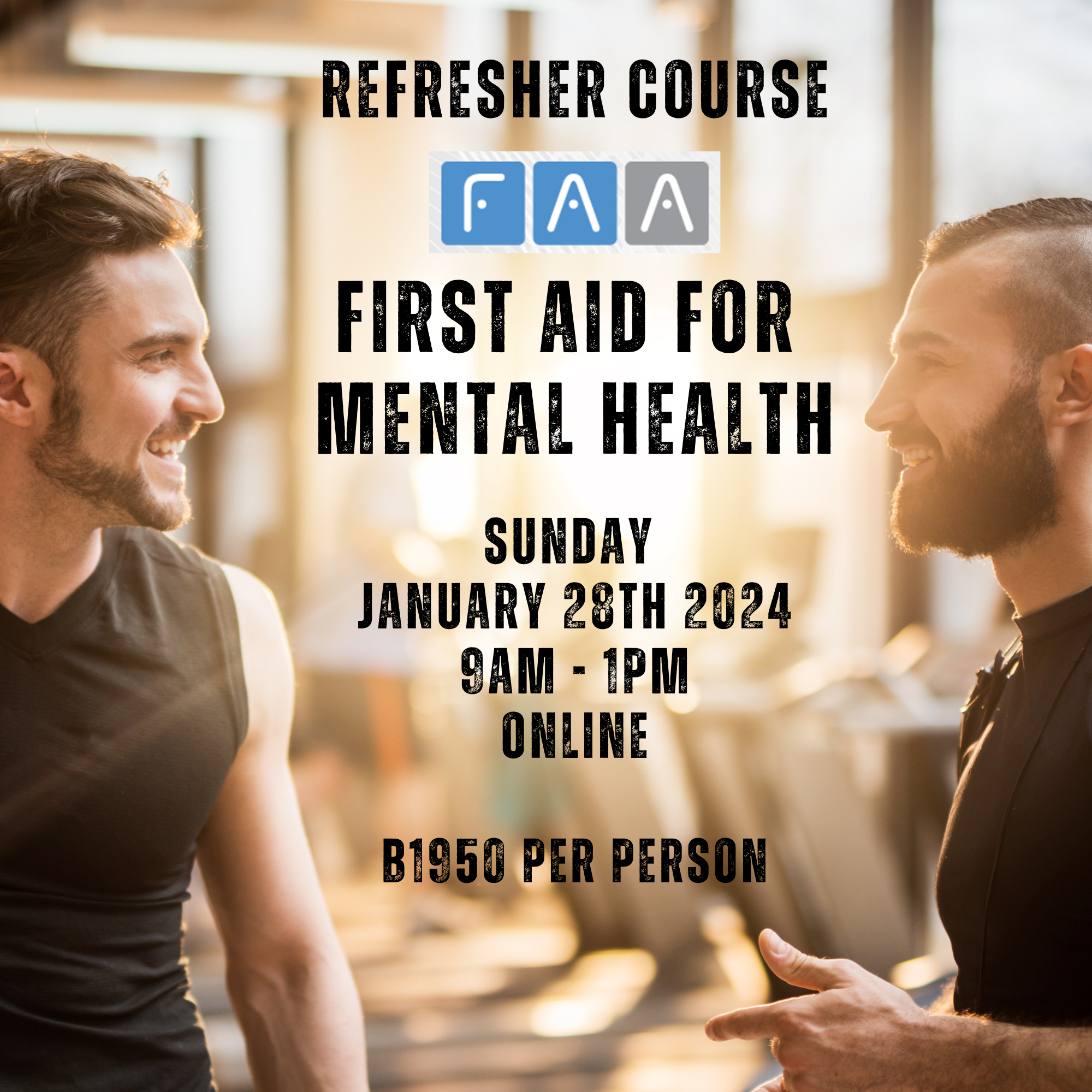
It is highly recommended that First Aiders for Mental Health have annual refresher trainings, and I will be offering them online for the first time in 2024, starting in January.
This course has been designed for First Aiders for Mental Health to refresh their skills and knowledge and to stay up to date with current events.
The course covers key topics from the regulated First Aid for Mental Health qualifications, including the signs and symptoms of mental health conditions, how to develop a first aid action plan for mental health and ways in which people can improve their general wellbeing.
It is a 3-hour theory-based training course taught online covering topics such as:
The first course will run on Sunday 28th January from 9am – 12pm (Bangkok time) and you can sign up here: First Aid for Mental Health Refresher Course – Aylssa Cowell
Today is day 1 of my Doctorate of Professional Studies in Social Care & Community: Policy and Practice. Which is a mouthful to be honest. A “Prof Doc” as it is shortened to, is like a PhD (Doctor of Philosophy) but more focused on research that has practical applications to the workplace. This is more my style – I dislike research for the sake of research. I wanted to do something that was pragmatic and had real-world application. Something that could be implemented when I am finished.
After I get through the initial modules, I am going to be researching how international schools respond to child protection disclosures when there is little to no statutory provision in the host country. International schools in particularly in Asia and the Middle East, often find themselves in the following situations: the law being unclear, e.g. in Thailand it is illegal “to torture” your children – but what does that actually mean? What happens, therefore, if a parent is physically abusing their child, but the law does not say this is constitutes torture? Or you believe a child is being physically abused but the authorities say it doesn’t meet a threshold and ask what they did to deserve it? Or the reverse, if the law states it is illegal to use physically abuse your children, but there isn’t the services in-country to deal with it. Or a child is in serious danger today, but you know services are so stretched that no-one will come to help for 6 months, if at all…
As a pastoral team what do you do next?
Or what happens when you have a case of peer on peer abuse, say sexual violence, and the country laws prosecute young women for extra-martial sex? Or perhaps the alleged perpetrator is a staff child or the child of a very important person. Ethically what do you do?
Or perhaps you have an expat family, or even teaching staff where there are rumours of domestic violence; how or even should the school intervene if the laws in the country say it’s ok? What do you do when you are faced with a situation which would be so straightforward in Europe to deal with – you just call social services – when you cannot rely on services in your host country?
As a former Designated Safeguarding Lead (DSL) at a large international school, who now supervises DSL’s across Asia and the Middle East, and trains schools in Safeguarding, I know there is a huge discrepancy between how individual schools work around these issues. Some schools have excellent procedures, some schools bury their heads in the sand. Many schools do generic tick box training which is UK centric and has little real world application out here. But they need something that says “Level 3” on it, regardless of how useless it is.
And this is the hole I want to plug. I want to find out how schools are making these decisions and what they do next. How do they act in the best interests of their students? What do they need to help them make the right decision?
I will keep you posted!
 Aylssa Temple