Jump.

I sat in the tree and started panicking about how I was going to get down. My 8 year old legs dangled off the sturdy branch but I was too scared to stand up to turn around to go back the way I came. My little brother climbed trees all of the time – right to the top – neighbours often left their houses to shout at him to get down, as he swayed on tiny branches. There was no way any of the adults could climb that high and they probably realised if he got stuck, like a cat, the fire brigade would have to be called. It was a skill that would have been revered in the Pacific islands where coconuts needed to be cut down; in northern England in the 1980’s not so much. I also wanted to be able to climb trees but was nowhere near as fearless as he was.

The ground looked so far away. I felt like I was on top of a huge cliff and I was convinced I was going to die if I jumped. Thankfully none of the 15 or so feral kids from our street were there to see my cowardace. I am pretty sure if they were they would have climbed up behind me and pushed. I close my eyes, take a deep breath and jump.

The blood was fairly instant and its metallic taste flooded my mouth. I had hit the ground hard and my rabbit like big teeth had exploded through my bottom lip as I landed. Bursting into tears I ran the 10 metres or so home to get help. Reassured I wasn’t about to die, the bleeding eventually stopped and I ended up with a bottom lip influencers now could only dream of.

I didn’t climb that tree again but was hanging off underpasses a couple of years later dropping the three metres or so to the ground when my finger tips couldn’t hold on any longer. I have another memory of dangling upside down on a kids climbing frame at twelve, right on the cupse of teenagehood and self-conciousness.

These little big risks shape kids sense of danger and confidence. Although it didn’t end well I couldn’t help but be proud that I did it – I climbed that tree! Yes I got hurt when I jumped off but I never jumped with my mouth open again. The no nonsence mopping up of the blood by my parents probably helped a lot. Fix it up, go back out to play. Our house, probably like many in the 1980’s, always had a supply of medical tape and steri-strips, aka paper stitches, as there was always one of us “feral” children bruised and bloody from stuff we got up to.

I also remember turning about ten years old and sitting in our porch surrounded by kids while I tried to beat my score on Tetris. We had a Gameboy and all of the kids wanted a go. I was reigning champion but my competition was fierce. We all got one or two shots each then we went back outside to play run around the block or something similiar. We had other options – electronics were just one part of what we could do, and that is how it should be now. Phones, video games and other devices have a place in childhoods, but kids shouldn’t only have this as an option. They need time to socialise, to run about and fall over, to make up games with ridiculous rules that no adult would understand, to learn all of the soft skills they need – how to stand up for themselves, how to be creative and how to problem solve getting stuck up trees.
Wellbeing Challenges for International School Counsellors: The Research (originally written for SE Asia School Counselling Network)

Wellbeing Challenges of International School Counsellors: Research Findings I have recently been trawling the internet for research articles for my doctorate in safeguarding in international schools, and I came across this article: ‘A phenomenological analysis of the role and wellbeing challenges experienced by professional international school counsellors‘ by Scott Langston and William Van Gordon published in the British Journal of Guidance and Counselling (4 Oct 2023). Despite a gobful of a title, it actually has some pretty strong themes that I hear a lot in supervision sessions and in group discussions at our annual conference. Conducting semi-structured interviews with 8 professional international school counsellors, the authors found 3 main themes: I’ve only got one pair of hands! This theme related to workload and how school staff did not always fully understand what our job is Empathy is a two way street This related to the value of interpersonal relationships and online support with peers and other mental health professionals – we need help too! A balancing act We need to keep up regular healthy habits and have social connections. What was really interesting to me was the similarities between what I hear as a clinical supervisor, how I felt as a school counsellor and the research. I would often say to my counselling colleague that no-one really understands what we do as counsellors in a school, until they are pulled into one of our crises and into the vortex. The lack of understanding of the role of school counsellor means for some people they are used an extra teacher – covering lessons, doing playground duties, coaching sports teams and various other things. There was also a lack of a detailed job description for some counsellors meaning it was difficult for them to maintain boundaries and have other staff really understand what they do, including the many hours they spend, not only talking to students but also to teachers and parents. There was also a sense of isolation for many of the participants, and a need to come together with other international school counsellors. The strategies that Langston and Van Gordon (2023) suggest are as follows with a few reflective thoughts: The Role of the International School Counsellor There should be a baseline job description that could be adapted to local schools and circumstances. I think this could be particularly useful for schools that do not work to the American or ISCA model such as Social and Emotional Counsellors in British Schools. Clarify the extent to which counsellors are expected to do non counselling duties. Without a very specific job description this may be difficult. It would also be useful to write these as blocks of time? Allow counsellors to manage their own time. Make the role clear to the community. How do you describe and inform teachers, support staff, parents and senior management about your job? Direct Support International School Counsellors should be encouraged to network with others in the same role through international conferences, training and online groups. You can find out more about our annual conference and join our facebook group here. But more locally, can you set up or attend a group for international school counsellors in your city or country? Clinical supervision is a must. I would also argue that having a supervisor with international school experience is incredibly valuable. You can find a list of supervisors here. Develop school crisis plans in advance, so if the worst happens it doesn’t all land on the counsellors head. Do you have crisis plans in your school? Or procedures about how to work with serious cases? Does everyone know what they are supposed to do in an emergency? Schools should conduct exit interviews to establish what may need to be put in place for the incoming counsellor. How does your school do handovers? Do they do exit interviews and do you feel comfortable enough to be honest? Facilitating Habits Schools should consider providing facilities or memberships to enable regular exercise. Does your school provide this? Use external faciliators for staff wellbeing days so the school counsellor can also learn as a participant instead of always leading. Do you feel your school has training or wellbeing days that are useful to you? Encourage healthy boundaries – e.g. no out of hours emailing. I would also encourage taking your work emails off of your phone entirely. If you are needed in an emergency they can always call you. How do you enforce healthy boundaries at work? There are lots of things to think about as we head into the school holidays, and if we reflect and find that there are some things we might like to change for the next academic year, we can start planning how we are going to do that. What do you think should also be included in the list?

Wellbeing Challenges of International School Counsellors: Research Findings

New Annual Refresher Training for First Aiders for Mental Health

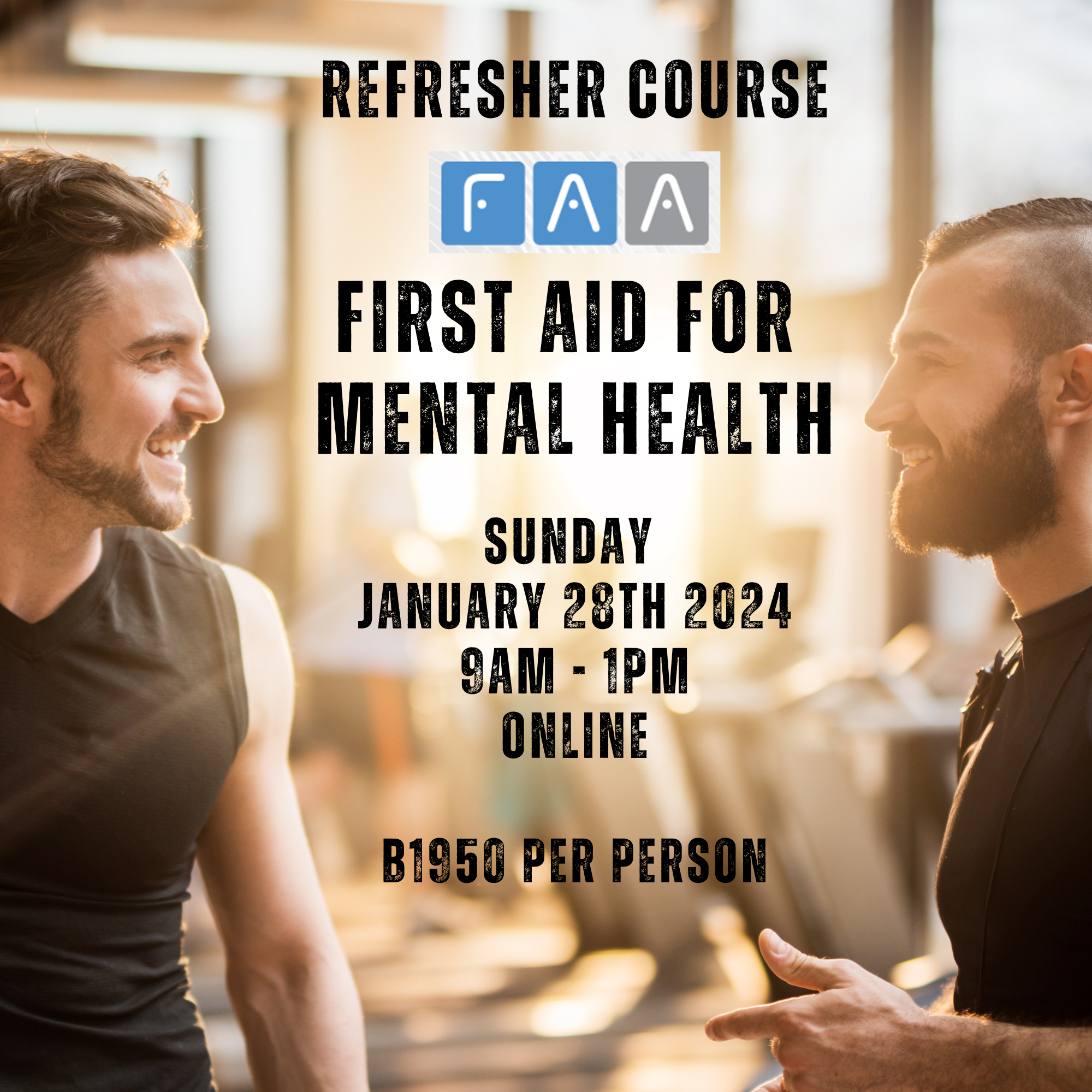
First Aid for Mental Health Refresher Course January 2024

It is highly recommended that First Aiders for Mental Health have annual refresher trainings, and I will be offering them online for the first time in 2024, starting in January.

This course has been designed for First Aiders for Mental Health to refresh their skills and knowledge and to stay up to date with current events.

The course covers key topics from the regulated First Aid for Mental Health qualifications, including the signs and symptoms of mental health conditions, how to develop a first aid action plan for mental health and ways in which people can improve their general wellbeing.

It is a 3-hour theory-based training course taught online covering topics such as:

  • Stress
  • Mental health conditions
  • First aid action plan for mental health
  • Current external factors affecting mental health
  • Wellbeing

The first course will run on Sunday 28th January from 9am – 12pm (Bangkok time) and you can sign up here: First Aid for Mental Health Refresher Course – Aylssa Cowell

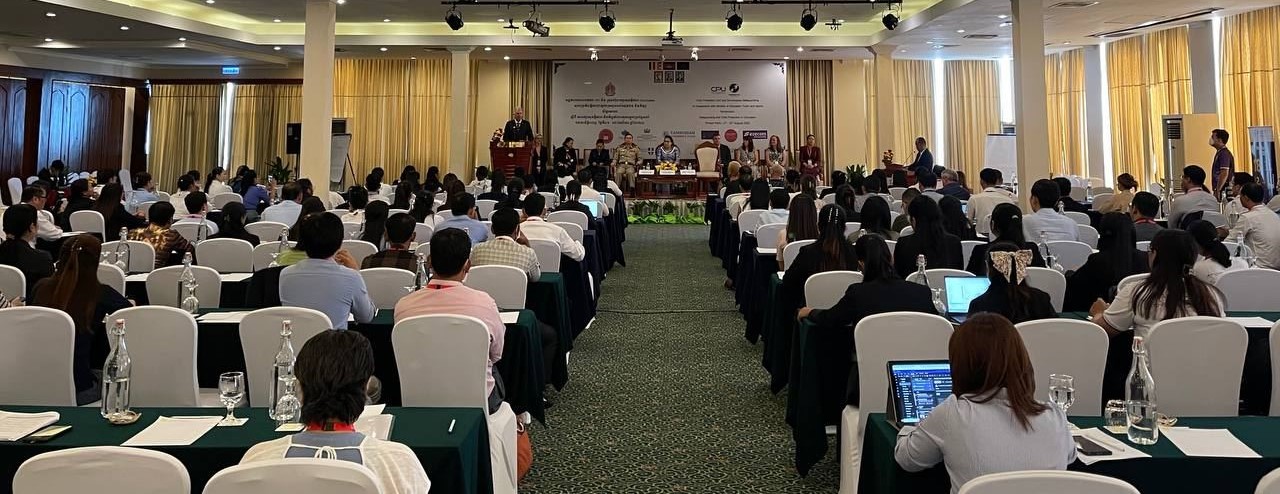
The First Symposium on Safeguarding & Child Protection, Cambodia, August 2023

This week I was honoured to be a part of the first Symposium on Safeguarding and Child Protection in Education, held in Phnom Pehn in Cambodia, alongside Sian Jorgensen from Encompass Safeguarding and the Child Protection Unit a non-governmental organisation dedicated to helping the local police solve serious crimes against children.

On day one I trained 16 people from the Anti-Human Trafficking and Child Protection Unit of the National Cambodian Police, teachers, charity workers and representatives from the Ministry of Education and the Ministry of Womens Affairs, in Basic Psychological First Aid for Young People. This was a Training the Trainers course, meaning they will then be able to train their colleagues and other staff who may find it helpful. Psychological First Aid is a relatively new concept in Cambodia and I hope the training is cascaded to those who need it.

The conference started in earnest the following day with Sian training 130 teachers from 40 schools across the region, in Level 1 Safeguarding. teaching them how to spot if a child or young person is being abused and what they need to report to their designated safeguarding leads. She also had trained about 16 people the day before to be safeguarding trainers themselves.

On day two participants heard talks on the laws in Cambodia with regards to sexual consent and sexting, safer recruitment of staff, how to talk to children who are disclosing abuse, and from me, a presention on Peer on Peer Abuse with a focus on sexually harmful behaviors, and a talk on the importance of believing children when they disclose, and being mindful of our body language and tone of voice as to not victim blame or further shame children. The main points of my presentations are below:

Peer on Peer Abuse: Main Points

  1. Young men under 18 are the age group most likely to be victims of, and perpetrators of serious physical violence.
  2. The place young women are most likely to be sexually harassed or assaulted worldwide is school
  3. The strongest indicator of adult interpersonal violence is early exposure to it and peer approval of it. Young people because of their age and experience may not know what a healthy relationship looks like and will rely on scripts from their friends.
  4. Where peer on peer abuse is normalised by friends and family, there is less safety seeking.
  5. School has the opportunity to disrupt the normalisation of peer on peer abuse by teaching about consent and healthy relationships.
  6. It is important to by tackle the “lower levels” of sexual violence such as sexualised name calling, rape “jokes” and cat-calling, because these normalise more serious sexual violence.
  7. Do an audit of your school with your students – where do they feel unsafe? Where is bullying and sexual or physical violence most likely to happen? What suggestions do they have to disrupt this?

Responding to Children Who Have Been Harmed: Main Points

  1. Hearing stories of abuse can be heart-breaking and it can be tempting to ignore the signs that something is wrong, but we mustn’t do that.
  2. Shame, fear of, or attachment to their abusers can hinder a child disclosing what is happening to them.When we are talking to them, we must ensure we don’t blame them or shame them as this will stop them from talking to us, or perhaps even seeking help in the future.
  3. What children and young people can’t tell you with their words they will show you with their behaviour. As educators we must look out for changes to their ABCs – appearance, behaviour or communication (this can include social media posts, drawings and creative writing).
  4. Tone of voice and body language is incredibly important. We must pay attention to the messages we give off when talking to children and young people. A sharp or angry sounding tone of voice will make them feel shamed or a nuisance and will shut down conversation. Looking distracted or like you need to be somewhere else will make them feel like you don’t care, and shut down conversation.
  5. It is not your job as educators to determine guilt or innocence. You don’t need to interrogate them, you just need the basic facts to handover to your DSL or the Child Protection Unit.
  6. There have been too many cases where children have died at the hands of parents because, despite lots of people knowing that something was happening, no-one did anything, because they questioned themselves “what if I am wrong?”. As a former DSL in a school I would much rather get a report that turned out to be nothing, than something not being reported that was something. Don’t ask yourself “what happens if I am wrong” ask “what if I am right”
  7. Sexual predators don’t only groom young people – they also groom the adults around them. In schools, it is important to be clear on what is and isn’t appropriate behaviour in terms of teacher-pupil. And let the students know who to report to if it happens to them. Students are rarely surprised when a teacher is arrested – they know who the creepy teachers are, the problem is they assume you do too.

I had a great time in Cambodia and I hope that I am able to go back to build upon the work we started there. Many thanks to Sian for inviting me along, and to everyone at the Child Protection Unit for their amazing hospitality and for pulling together a packed conference in a few short months.

You can donate to the Child Protection Unit, through their parent NGO the Cambodian Childrens Fund here. They are a small team who help the Cambodian National Police to solve serious crimes against children. They also support child victims and their families by supplying basic foods, and help train the Cambodian Police Force in interviewing and forensic skills. They do amazing work for victims.

Revision Audit

I recently posted a reel on Instagram explaining how to do a revision audit if you (or your child) were feeling overwhelmed with how much stuff you have to revise for your upcoming exams. Doing an audit of what you already know helps you to prioritise what to concentrate on and gives you a little boost and reminder of what you already know. An example audit is below; I recommend you do it for every subject you have

Thinking about Expat Mental Health

Moving to a new country can be a thrilling yet daunting experience. For expats, the culture shock and language barrier can lead to feelings of loneliness, anxiety, and depression. As an expat living far from home, it is important to prioritize your mental health in order to have a successful transition abroad. Here are a few tips for staying mentally healthy when living abroad.

Prioritize Self-Care
Self-care is the practice of taking time out of your day to relax and do what makes you happy. This could include going on walks with friends or family, indulging in hobbies such as painting or playing music, or even treating yourself to a spa day. Taking care of yourself will help manage stress levels and increase your overall wellbeing while living abroad—so make sure that self-care is at the top of your list!

Find Support Groups
When moving abroad it can be difficult to find new friends and make connections with those around you. Thankfully there are plenty of online support groups specifically designed for expats who are looking for community and guidance during their transition period. Joining these groups can help you feel connected and build relationships with other like-minded individuals who understand the unique challenges that come with living away from home.

Seek Professional Help if Necessary
If you’re feeling overwhelmed by the changes associated with moving abroad, don’t hesitate to seek professional help. There are many mental health professionals all over the world who specialize in helping expats adjust to their new environment and manage any feelings of loneliness, anxiety, or depression they may be experiencing due to the cultural differences between their home country and their current location. Remember that seeking professional help is not a sign of weakness; rather it’s a sign that you recognize how important it is to take care of your mental health while living far away from home.

Conclusion
Moving abroad can be both exciting and intimidating but by taking care of yourself, finding support groups online, and seeking professional help if necessary, you’ll be able to tackle any challenges that come up during your transition period so that you can focus on enjoying all the amazing opportunities that come with being an expat! With these tips in mind, there’s no reason why you won’t have a successful transition period while living far away from home! Get in touch if you would like to set up a free initial appointment.

Feeling Stuck? A Step by Step Guide to Dealing with Anything & Everything

Last Saturday I spoke at the Phuket Mental Health Talk about the 4 ways you can deal with anything. These are from Dialectical Behaviour Therapy and are as follows:

  1. Do nothing (Stay Miserable or Make Things Worse)
  2. Solve the Problem
  3. Change how you feel about the Problem, or finally
  4. Radically Accept that you can’t change what has happened / is happening.

Dialectical Behaviour Therapy (DBT) was devised by Marsha Lineham to work with highly suicidal clients and incorporates a skills section that the above come from. She asserts that “people want to get better but don’t have the skills to do so – let me teach you the skills”. Although devised for people struggling with their mental health, I think DBT Skills are useful for everyone and I am always pleased when I get the chance to talk at events like the one last Saturday.

If you are interested in learning more about these steps I have a pre-recorded course and workbook that is available to buy here currently on sale for $27 SGD.

How to find new friends when you move abroad

men and women sitting on concrete bench
Photo by Thoma Boehi on Pexels.com

One of the challenges of moving country is building your social networks. As much as many people have dreams of running off to a desert island to become a hermit, we can also hate to admit that we actually need people around us. Some of us come with ready-made networks – we get jobs in big corporations or in international schools and we are immediately linked in with people in the same circumstances. For others it is more difficult. For ‘trailing spouses’ who may be unable to work because of visa restrictions, or for childless people who don’t get the opportunity to meet other adults at kids birthday parties – sometimes moving abroad can be a lonely experience. So how do you find your people? Here are 3 ideas:

Use Social Media
Put a shout out in a local social media group and ask if anyone wants to hang out. Yes, it can feel a bit vulnerable but there will inevitably be someone else looking for a friend in there too. If you don’t want to do this yourself, wait until a newbie does a shout out!

Find (or start) a group around things you enjoy doing
This can be anything from joining a sports club to attending arts classes. I love reading non-fiction so set up a Non-Fiction bookclub and advertised it via social media channels. I remember sitting drinking tea and wondering if anyone would actually turn up but to my surprise and delight they did! I made some good friends who I would have usually have never met in day to day life.
What do you enjoy doing – how can you link in with others who enjoy the same thing?

Volunteer for a charity or a cause you believe in
Again, this is a common interest suggestion. Love dogs? Want to help children learn to read? By finding something you can get involved with can give you a sense of purpose (this also helps your overall wellbeing) first and foremost but it also will give you the opportunity to meet other people who care about the same issues.

What other ideas do you have? Let us know in the comments